Power Your Phone with Your Shirt
Solar textiles are transforming jackets and backpacks into personal energy stations you can wear.
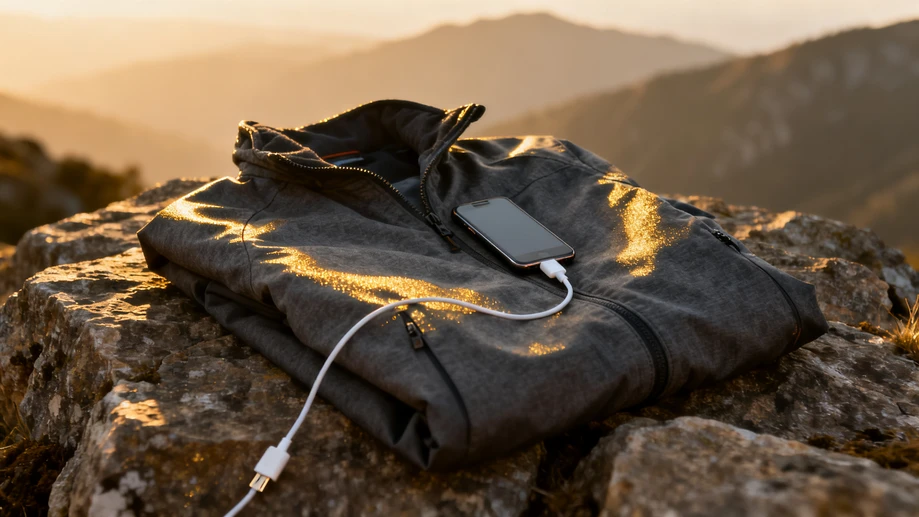
Imagine hiking through the mountains when your phone battery dies—no charger, no outlet, just fading daylight. Now picture unzipping your jacket, plugging in your device, and watching it revive using sunlight captured by the very fabric hugging your shoulders. This isn't science fiction; it's the reality of solar textiles, where flexible photovoltaic cells thinner than a credit card are woven directly into clothing fibers. Companies like Pvilion and Solar Fiber have already launched backpacks and coats that generate 5-10 watts—enough to charge a smartphone in two hours of direct sun. The secret lies in polymer-based solar threads that bend like cotton and resist water, turning ordinary garments into silent power plants without adding bulk or stiffness.
How does your shirt actually harvest sunlight? Traditional rigid solar panels use silicon wafers, but wearable tech employs organic photovoltaics (OPVs)—lightweight layers of carbon-based molecules printed onto flexible films. When sunlight hits these layers, electrons get excited and create current, much like leaves converting light to energy. The breakthrough came when researchers embedded these films between ultra-thin protective coatings, allowing them to survive washing machines and wrinkles. Recent models from brands like Tommy Hilfiger even hide solar strips in collars and cuffs, making tech invisible. Efficiency has jumped from 3% to 15% in five years, meaning your future raincoat could power GPS during storms.
Solar fashion is exploding beyond niche gadgets. In Tokyo, commuters wear solar-blended suits charging wireless earbuds; Kenyan farmers use solar-embedded hats to power LED lamps for night work; and European cyclists drape power-generating capes over handlebars to extend e-bike range. Designers are collaborating with tech firms—Adidas’ Terrex solar hoodie, for instance, features removable panels for cloudy days. The environmental payoff? One solar jacket offsets 20 phone charges monthly, equivalent to saving 1 kg of CO2. As prices drop from $500 to under $200, analysts predict 30% annual market growth, with sportswear leading the charge.
Challenges remain, like boosting efficiency on cloudy days or after 50 wash cycles. But innovations are accelerating: MIT’s "solar ink" can be sprayed onto fabrics, while Australian scientists developed textiles storing excess energy as heat for nighttime use. Unlike clunky power banks, this tech integrates seamlessly—imagine hospital scrubs powering medical sensors or refugee tents generating light. As one engineer quipped, "Soon, forgetting your charger will mean forgetting to wear pants." With solar threads becoming as commonplace as Lycra, your wardrobe might just become your most reliable outlet.