Is Your Home Lighting Smarter Than a Chameleon?
How AI-Powered Lights Transform Your Rooms Instantly
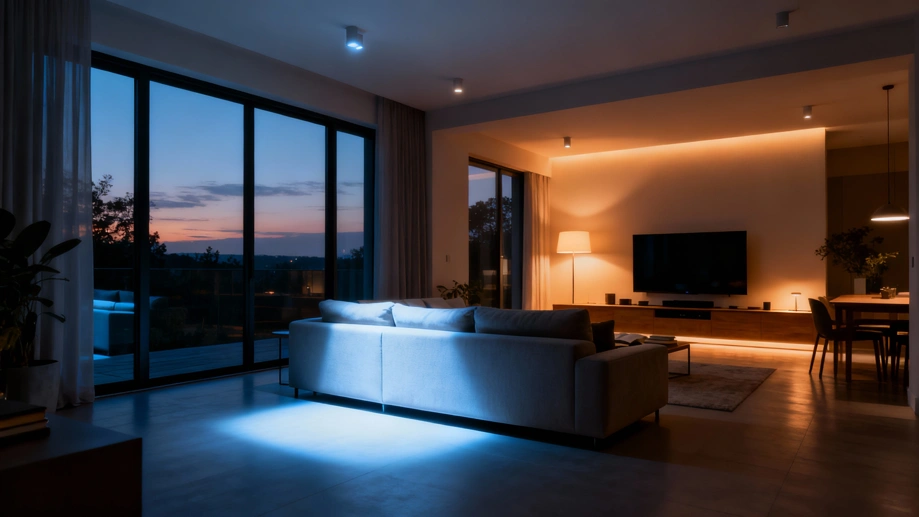
Imagine stepping into a room where the lighting instinctively shifts to match your activity – reading bathed in cool, focused brightness, movie nights glowing with warm, dimmed ambiance, and mornings gradually brightening like a natural sunrise. This isn't sci-fi; it's the reality of modern smart lighting systems. They go far beyond simple voice commands, employing sophisticated algorithms and sensors to adapt continuously to your environment and needs. At its core, smart lighting learns from routine patterns while responding instantly to real-time cues like motion or natural light changes, creating spaces that feel almost intuitively supportive.
Forget the complex manual adjustments or hunting for multiple remotes. The true magic lies in automation and context awareness. Motion sensors detect when someone enters a room, instantly providing illumination without a single button press. Daylight sensors measure the sunshine pouring through your windows and automatically dim artificial lights to maintain a constant, comfortable brightness level, saving energy effortlessly. Schedule routines mean lights gently nudge you awake or wind down the home at night, perfectly syncing with your circadian rhythm.
Moving beyond simple convenience, this technology significantly impacts wellbeing. The ability to precisely tune color temperature – shifting from energizing cooler whites to relaxing warmer hues as evening approaches – mirrors our natural response to sunlight. This supports healthier sleep patterns and reduces digital eye strain. Brightness adjustments ensure rooms are always comfortably lit, eliminating shadows during tasks or harsh glares on screens. Environmentally, the impact is tangible. Optimized scheduling and motion-activated systems drastically cut down on wasted energy from lights left burning in empty rooms, contributing to lower electricity bills and a reduced carbon footprint without demanding constant user vigilance.
Integration is where smart lighting truly shines within the broader smart home ecosystem. Lights don't exist in isolation; they communicate. When your security system arms itself for "away" mode, lights can automatically turn off or even mimic occupancy patterns. Connecting lights to a central smart hub allows creating intricate scenes; a single "Movie Time" command can lower window shades, dim specific lights to a preset level, and leave a subtle path light active. Compatibility with mainstream voice assistants provides convenient hands-free control, making adjustments accessible even when occupied or across the room.
Despite the sophistication, setup is surprisingly straightforward. Modern systems often require just a smartphone app and a reliable Wi-Fi connection. Many simply replace standard bulbs or switches. While initial setup involves assigning lights to rooms and creating basic schedules, the complexity can grow as desired – setting location-based automation via GPS so lights welcome you as you approach home, or defining different moods for various occasions. Robust security measures like encryption protect the wireless communication ensuring your lights remain private and hacker-resistant.
The evolution of smart lighting points towards even more seamless intelligence. Future iterations promise increased integration with other sensors – lights that subtly change in response to biometric signals indicating stress levels or adjusting to optimize focus during remote work hours. Refined algorithms will lead to predictive adjustments, anticipating needs rather than merely reacting to them. This continuous innovation transforms lighting from a passive utility into an active, responsive component of a healthier, more efficient, and truly intelligent living environment, proving your lights can indeed rival the adaptive genius of nature.