Why Can't My Cat Sell Its Selfies as NFTs?
Demystifying the Web3 Revolution from Your Living Room to the Blockchain
The internet we know today feels oddly... centralized. Your vacation photos? Hosted on a tech giant's server. Your witty tweet? Property of a platform where algorithms dictate visibility. Your online purchases? Tracked meticulously by corporations. It’s like renting digital space on someone else’s land, forever subject to their rules and rent hikes. What if there was a different way? An internet where you truly own your data, digital assets, and identity? Enter Web3 – not just a buzzword, but a fundamental shift powered by blockchain, aiming to wrestle control back to users.
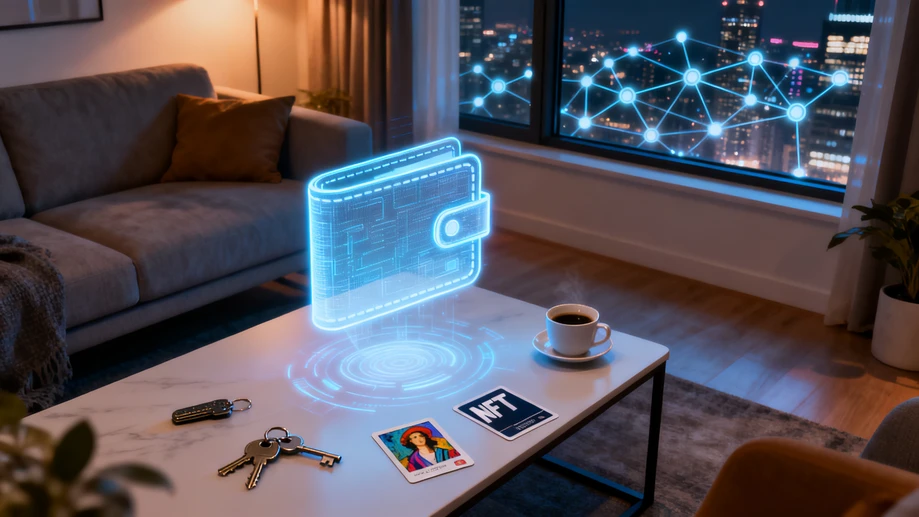
At its heart, Web3 replaces trusting powerful intermediaries (like banks or social media companies) with code and cryptography. Imagine a massive, shared, tamper-proof digital ledger – that's the blockchain. Everyone can see transactions (transparent), but no single entity controls it (decentralized). This ledger securely records ownership and interactions. Instead of logging into platforms via Google or Facebook (handing them your data), Web3 proposes digital wallets as your passport. Your unique crypto wallet holds your digital assets, like cryptocurrencies, tokens representing art (NFTs), or even access rights, and proves your identity securely across different applications without giving away your personal info. Think of it as owning your digital self.
So, what does this actually look like in everyday life, beyond Bitcoin’s price swings? Consider digital art. An artist can create a unique digital painting and mint it as an NFT (Non-Fungible Token) on the blockchain. This NFT proves irrefutable ownership and authenticity. You buy it directly from the artist using cryptocurrency. Now you truly own that digital piece. It’s securely stored *in your wallet*, not on a gallery’s server. You can display it in virtual galleries, resell it, or even program it so the artist gets a royalty every time it’s resold. This concept extends to music, virtual land in metaverses, or exclusive content access – all verifiably owned and traded peer-to-peer.
Ownership gets even more interesting with Decentralized Autonomous Organizations (DAOs). Imagine a club, an investment fund, or even a community project governed not by a CEO or board, but by rules written directly into code and enforced by the blockchain. Members (holding specific tokens) vote on proposals, treasury management, and future direction. Decisions are transparently recorded and executed automatically. While DAOs face challenges (complexity, legal gray areas), they represent a radical experiment in collective, trustless decision-making. Imagine a global community funding a music festival or a scientific research project, where every contributor gets a say proportional to their stake.
Web3 isn't magic fairy dust. It faces significant hurdles. Complexity is a major barrier; crypto wallets, seed phrases, gas fees (transaction costs), and navigating decentralized apps (dApps) can feel overwhelming compared to streamlined Web2 experiences. Scalability is another issue – popular blockchains can get slow and expensive when busy. Environmental concerns linger around the energy use of some consensus mechanisms (though alternatives like Proof-of-Stake are rapidly improving). Regulatory clarity is still evolving worldwide. And crucially, true decentralization is hard to achieve and maintain; the specter of centralization through dominant players or protocols looms. It’s a nascent ecosystem undergoing rapid, sometimes messy, evolution.
Despite the challenges, Web3 presents a compelling vision: an internet built on user ownership, direct control over data, peer-to-peer interactions verified by cryptography, and community governance. It's not about replacing everything overnight, but offering alternative models where users aren't the product, but the owners. While your cat selling its selfies as NFTs might still require more user-friendly interfaces and legal frameworks, the core idea – individuals directly owning and monetizing their unique digital creations – is already becoming a reality. Web3 invites us to imagine an internet rebuilt, not on the whims of corporations, but on the principles of verifiable ownership and community collaboration. The journey is just beginning, and it promises to be anything but boring.