Harnessing Ocean Breezes: The Invisible Power Behind Floating Wind Turbines
How underwater kite-like designs are revolutionizing offshore wind energy in deep waters where traditional turbines can't reach
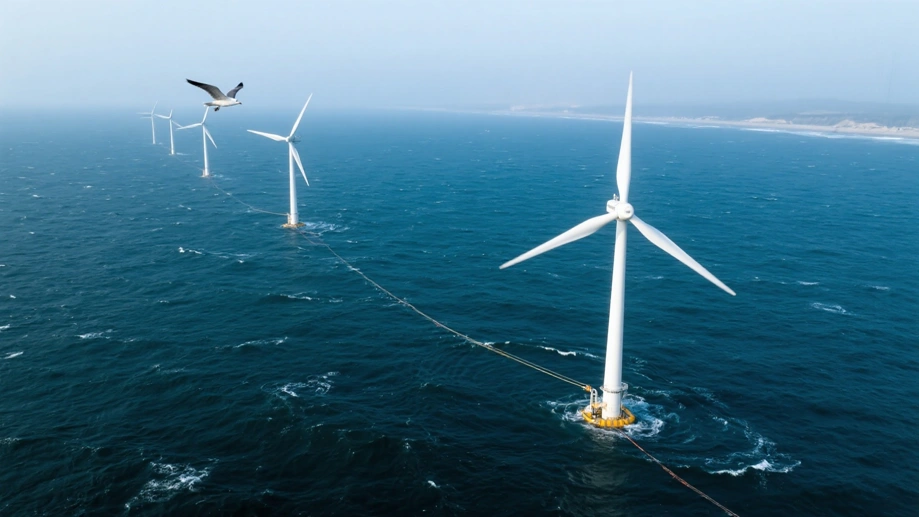
Picture this: deep ocean waters where traditional wind turbines can't anchor to the seafloor. Instead of giving up on these windy frontiers, engineers have developed floating structures that bob like apples while their blades harvest powerful offshore winds. These aren't your typical land-based windmills. The secret lies beneath the waves where sophisticated mooring systems act like underwater puppeteers.
The real magic happens in how these floating giants handle their constant dance with the waves. Computer-controlled ballast tanks constantly shift weight like a tightrope walker adjusting their balance pole. Smart sensors track wave patterns and wind speeds 50 times per second, tweaking blade angles automatically. This isn't about fighting the ocean's movement but working with it. Each gentle sway actually helps reduce stress on the structure.
What makes deep-water wind so valuable? It blows stronger and more consistently than coastal breezes. Projects now under construction will generate 30% more electricity than equivalent coastal farms. The newest floating turbines stretch taller than the Eiffel Tower's observation deck with blades sweeping areas larger than football fields. This matters because doubling blade length quadruples energy capture.
Installation presents mind-bending logistics. Turbines are assembled in sheltered ports then towed upright like floating candles to sites over 100 miles offshore. Special vessels unspool mooring lines that descend thousands of feet to grip the seabed with screw anchors. This process can happen in water depths up to half a mile - impossible for fixed foundations.
The environmental balance is delicate. Early worries about underwater noise disturbing whales led to innovations like bubble curtains during installation. Artificial reef effects are emerging - preliminary studies show fish populations increasing around turbine bases. Marine growth on mooring lines becomes an unexpected buffet for sea creatures.
Cost remains the challenge. Current floating wind power costs about double that of fixed offshore turbines. But the gap is closing quickly as designers simplify designs. One breakthrough mimics kite mechanics - tethered platforms with turbines angled like kites catching wind, dramatically reducing material needs. Prices could match fixed foundations within seven years.
Norway's Hywind project proved the concept could work reliably, operating through hurricane-force storms. Now projects from California to Japan harness stronger, steadier winds further offshore. By 2030, floating wind could power 16 million homes globally. This untapped resource could provide ten times current worldwide electricity demand.