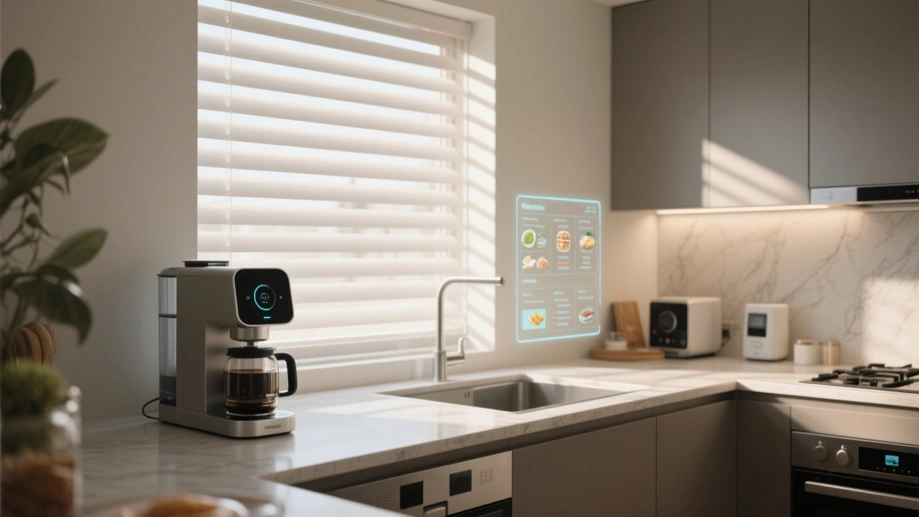
The Secret Symphony: How AI Orchestrates Your Smart Home
Discover the unseen intelligence behind everyday automation that learns your routines to save energy and time.
In the quiet hum of modern life, smart homes are no longer just a futuristic dream—they are becoming as common as the smartphones in our pockets. From thermostats that adjust temperatures to lights that dim on command, these systems promise to simplify our daily grind. But beneath this convenience lies a sophisticated dance of artificial intelligence, weaving together data and decisions to create a seamless experience. This hidden layer transforms gadgets into responsive partners, adapting to your habits without constant manual input.
At its core, the AI technology in smart devices operates through machine learning algorithms. These algorithms analyze patterns from your interactions, such as when you turn off lights or adjust heating, to predict future behavior. For instance, a smart thermostat might observe that you prefer cooler temperatures at night and gradually shift its settings over time. This isn't magic; it's computational learning based on real-time data streams from sensors and user inputs. Over weeks, the device refines its predictions, becoming more accurate and efficient with each cycle of adjustment. The result is a home that feels intuitive, responding to subtle cues that might go unnoticed by human senses.
This adaptive capability offers tangible benefits beyond mere convenience. One major advantage is energy conservation: AI-driven systems optimize usage by learning peak activity hours and reducing power during idle times. In lighting controls, for example, devices detect when rooms are unoccupied and dim automatically, cutting electricity waste by up to 30% annually. Similarly, for heating and cooling, predictive adjustments based on weather forecasts and occupancy patterns can slash utility bills without compromising comfort. The AI not only saves money but also contributes to environmental sustainability by minimizing carbon footprints in an era where every watt counts. However, this efficiency doesn't come without nuances; it requires reliable data flow and occasional recalibration to avoid errors like overheating or false triggers.
Beyond energy savings, the AI enhances everyday safety and wellness through proactive monitoring. Devices equipped with motion sensors and cameras can learn normal household rhythms, identifying anomalies such as unusual activity or potential hazards. If a smart door lock detects repeated failed access attempts, it might alert you via app notifications, preventing unauthorized entry. For health-focused users, AI can track air quality metrics and adjust ventilation systems in response to pollution spikes, promoting better indoor environments. This layer of intelligence turns homes into guardians, watching over residents while they sleep or work. Yet, transitioning to such support raises questions about dependency—over-reliance on automation might dull basic skills, like manually resetting systems during outages, so it's wise to maintain a balance.
The sophistication of these systems grows with evolving data inputs, yet it sparks concerns about privacy and security that demand attention. As devices collect vast amounts of personal information—from daily schedules to voice commands—robust encryption becomes crucial to prevent breaches. Recent advancements involve on-device processing, where AI computations happen locally rather than in the cloud, slashing the risk of data leaks. Users can take simple steps to protect themselves, such as enabling two-factor authentication or reviewing privacy settings in apps. Embracing this technology responsibly ensures that smart homes enhance life without compromising safety, turning potential vulnerabilities into strengths through informed choices.
Looking forward, the integration of AI in smart homes is set to deepen, driven by innovations like edge computing and improved sensors. Future devices may anticipate needs before you even realize them, like restocking groceries based on consumption patterns or adjusting lighting to combat seasonal affective disorder. This evolution promises even greater personalization, making homes feel like extensions of our minds. By understanding the AI's role now, homeowners can harness its full potential to create environments that aren't just smart, but truly wise and harmonized to human rhythms.