What Is Quantum Entanglement and How Does It Defy Classical Physics?
Exploring the mysterious phenomenon where particles remain interconnected regardless of distance, challenging our understanding of the universe.
Quantum entanglement represents one of the most perplexing phenomena in modern physics, where two or more particles become inseparably linked such that the quantum state of one instantly influences the other, even across astronomical distances. This connection persists irrespective of physical separation, violating classical notions of locality. When particles become entangled through interactions like photon emission or atomic decay, they lose individual identities and form a single quantum system described by a shared wavefunction. Measuring a property like spin or polarization of one particle immediately determines the corresponding property of its partner, a correlation that occurs faster than light could travel between them.
The fundamental mechanism behind entanglement lies in quantum superposition. Prior to measurement, entangled particles exist in all possible states simultaneously. For example, two entangled electrons might share a combined spin state where neither possesses a definite orientation until observed. This contrasts sharply with classical physics, where objects possess defined properties independent of observation. Entanglement demonstrates that quantum systems cannot be described by local hidden variables, as proven experimentally through violations of Bell's inequalities. These tests confirm that the correlations between entangled particles exceed what any classical theory could predict, requiring a radical reinterpretation of reality.
Quantum entanglement directly challenges Einstein's principle of locality, which states that objects cannot influence each other faster than light speed. Dubbed "spooky action at a distance" by Einstein, this phenomenon appears to enable instantaneous communication, though no information can actually be transmitted. The paradox arises because measurement outcomes remain random and uncontrollable; while entangled particles exhibit correlated results, observers cannot manipulate these correlations to send messages. This preserves causality while revealing a profound interconnectedness in nature that operates beyond classical spacetime constraints.
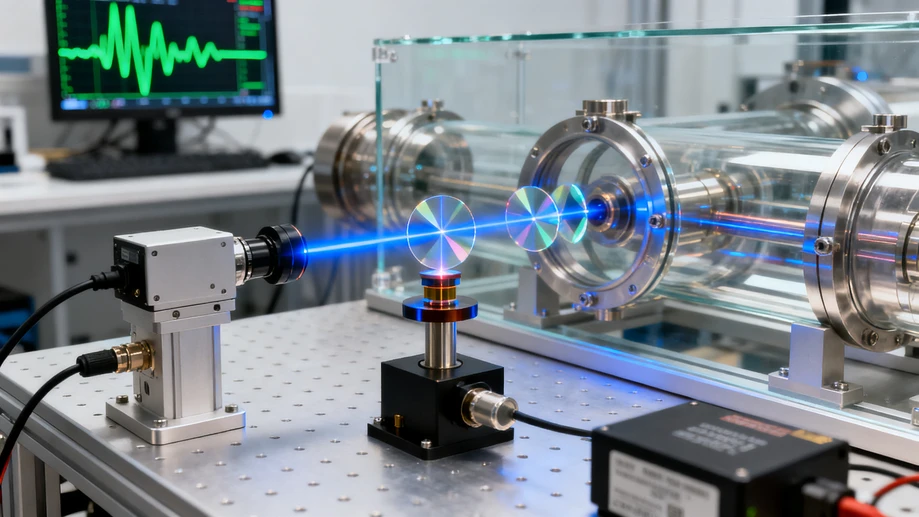
Experimental verification of entanglement employs advanced optical setups. Scientists generate entangled photon pairs using spontaneous parametric down-conversion in nonlinear crystals. These photons are then directed through beam splitters and fiber optic channels to separate detectors kilometers apart. Precision timestamps confirm correlations occur within time windows shorter than light-travel intervals. Recent experiments have entangled particles across 1,200 km via satellite links, eliminating potential loopholes and confirming quantum nonlocality as an intrinsic feature of physical reality.
Practical applications of entanglement are revolutionizing technology. Quantum cryptography leverages entangled photons to create unhackable communication channels; any eavesdropping attempt disrupts the entanglement and alerts users. Quantum computers use entangled qubits to perform parallel computations exponentially faster than classical systems for specific problems. Emerging quantum sensors exploit entanglement to detect gravitational waves with unprecedented sensitivity. These implementations demonstrate how a once-theoretical curiosity now drives practical innovations across multiple scientific domains.
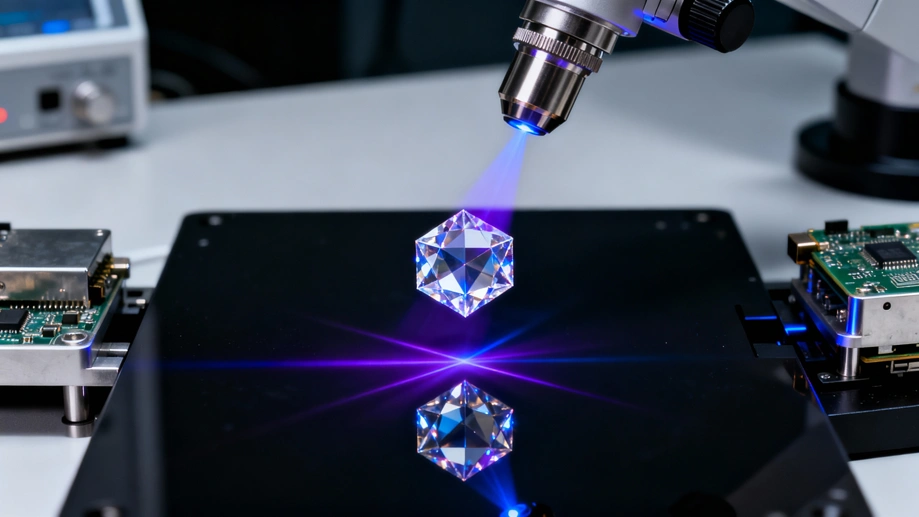
Ongoing research explores entanglement in increasingly complex systems. Scientists now entangle macroscopic objects like diamonds containing millions of atoms and investigate quantum coherence in biological processes such as photosynthesis. The phenomenon's role in quantum gravity theories suggests spacetime itself may emerge from entangled quantum networks. As experimental capabilities advance, entanglement continues to challenge our deepest assumptions about separability and locality, revealing a universe far more interconnected than previously imagined.