Bend It Like Tomorrow's Tech
The Hidden Manufacturing Revolution Making Your World Flexible
Imagine a phone that unfolds into a tablet, a bandage that monitors healing while conforming perfectly to your skin, or packaging that tells you exactly when your food spoils. These aren't sci-fi concepts; they're real products hitting the market today, powered by a quiet revolution in high-end manufacturing: flexible hybrid electronics (FHE). Forget clunky robots; this is about making technology bend, stretch, and seamlessly integrate into the fabric of our daily lives. The magic lies not in the gadgets themselves, but in the incredibly precise, cutting-edge processes used to build them – processes that print electronics onto bendable materials with microscopic accuracy.
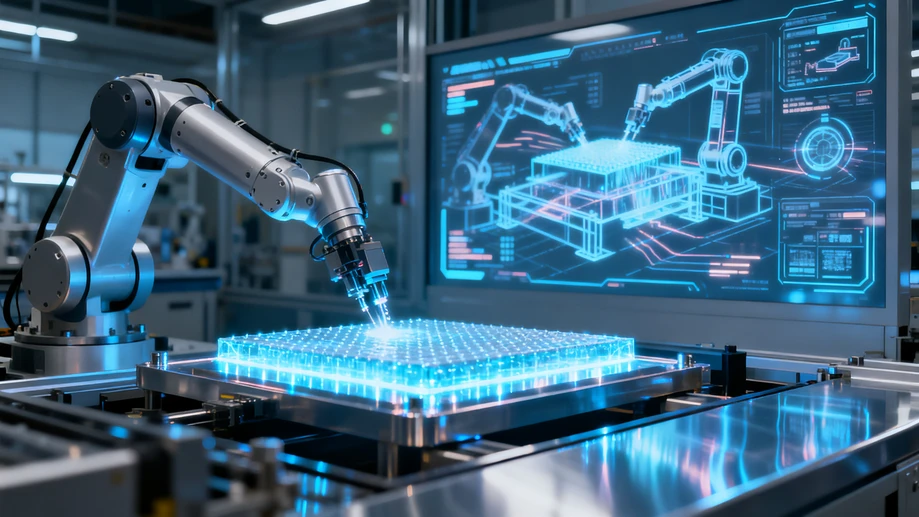
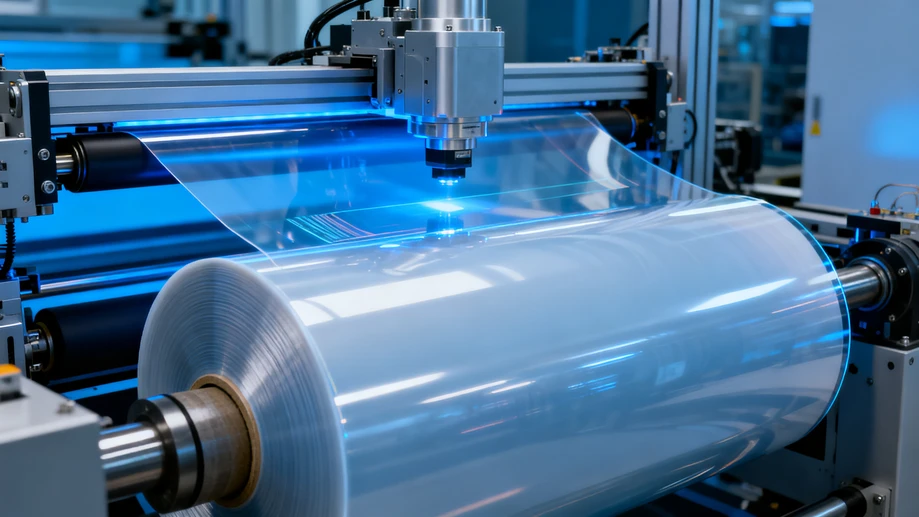
Think about your smartphone. The rigid glass rectangle is giving way to sleek, foldable designs. This leap is fueled by advanced manufacturing techniques like roll-to-roll (R2R) processing and ultra-precise additive printing. R2R works like a high-tech printing press, continuously feeding flexible plastic substrates (like ultra-thin, ultra-strong polyimide films) through stages where conductive inks, semiconductors, and insulators are deposited with nanometer precision using methods like inkjet printing or photolithography. Creating a foldable OLED screen involves depositing over a dozen layers of different materials – each thinner than a human hair – onto a flexible base, all while maintaining perfect alignment and electrical function. Companies like Samsung and BOE have spent billions perfecting these factories, where dust particles are the enemy and precision happens at scales invisible to the naked eye.
The impact extends far beyond your pocket. Consider healthcare. FHE manufacturing enables "electronic skin" – thin, flexible patches loaded with sensors. These can continuously monitor vital signs like heart rate, blood oxygen, hydration levels, or even specific biomarkers in sweat, all while being comfortable enough to wear for days. Unlike bulky hospital monitors, these patches are manufactured using biocompatible materials printed onto soft, stretchable substrates, allowing them to move naturally with the body. Companies like MC10 and Philips are pioneering these devices, offering real-time health data directly to your phone, potentially alerting users to health issues before they become serious, all thanks to manufacturing techniques that merge electronics with soft, human-compatible materials.
Look around your home and even your grocery store. Smart packaging is emerging, manufactured using similar FHE principles. Imagine a milk carton with a tiny, printed sensor that changes color or sends a signal to your phone when the milk spoils, based on detecting gases produced by bacteria. Or a shipping label on a package of expensive vaccines that continuously monitors temperature and humidity throughout its journey, ensuring it hasn't been compromised. These aren't complex circuits; they are often simple, single-function devices printed directly onto packaging materials using conductive inks and specialized functional materials. Companies like Thin Film Electronics ASA (Thinfilm) and PragmatIC Semiconductor specialize in manufacturing these ultra-low-cost, disposable smart labels, bringing intelligence to everyday objects without breaking the bank.
Even the built environment is getting flexible. Advanced manufacturing is producing next-generation building materials. Imagine concrete embedded with flexible sensors printed during casting, continuously monitoring the structure's health for stress, cracks, or corrosion – a self-diagnosing building. Or large, flexible solar panels manufactured using R2R processes, printed onto lightweight, durable films, making them easier and cheaper to install on curved roofs or unconventional surfaces. These aren't distant dreams; prototypes and pilot projects exist. The manufacturing challenge lies in scaling up these processes – integrating sensors during large-scale material production or printing efficient solar cells on vast rolls of flexible substrate – reliably and cost-effectively. The factories making these are pushing the boundaries of large-scale precision manufacturing.
The revolution in flexible, functional materials is already reshaping products we touch daily. It’s a manufacturing evolution happening not in isolated labs, but in highly automated, precision-driven factories, making the once-rigid world of electronics bend to our needs. The next time you fold your phone, check a health patch, or see smart packaging, remember: it’s not just clever design, it’s the triumph of incredibly sophisticated, high-precision manufacturing making the future flexible, functional, and fundamentally integrated into our everyday reality.