What is Quantum Entanglement?
A fundamental quantum phenomenon where particles become interconnected, defying classical physics and enabling revolutionary technologies.
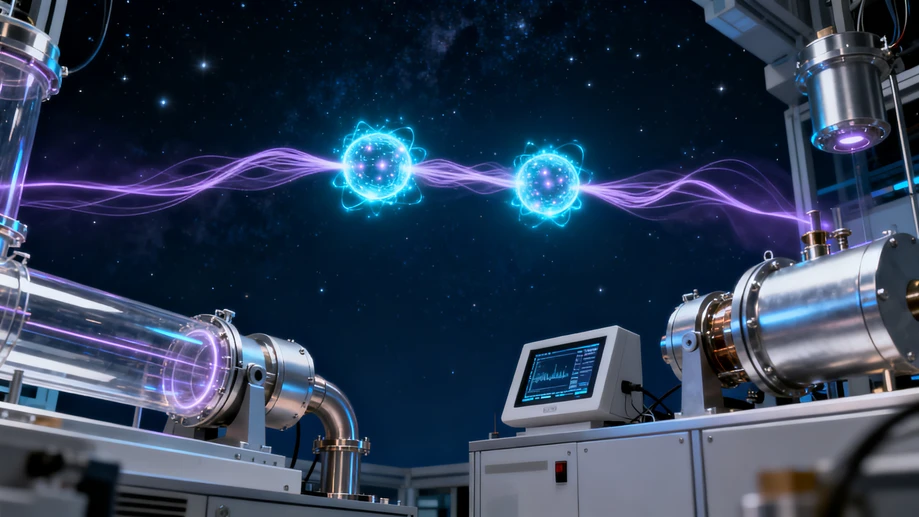
Quantum entanglement represents a cornerstone of quantum mechanics, describing a unique state where two or more particles become inseparably linked, sharing a single quantum description regardless of distance. When particles are entangled, measuring the property of one instantly determines the state of the other, even if separated by vast cosmic scales. This phenomenon emerges directly from the principles of quantum superposition, where particles exist in multiple potential states simultaneously until observed. The entanglement process typically occurs during interactions such as particle collisions or decay events, creating correlations that persist over time and space. For instance, in a pair of entangled photons, the polarization of one photon dictates the polarization of its partner upon measurement, without any signal transmission. This counterintuitive behavior challenges traditional notions of locality and causality, as it suggests instantaneous influence that appears to violate the speed-of-light limit imposed by relativity. Experimental setups often involve generating entangled particles through methods like spontaneous parametric down-conversion in crystals, where a single photon splits into two lower-energy photons with intertwined properties. The persistence of entanglement has been verified across various systems, including electrons, atoms, and ions, highlighting its universal nature in quantum frameworks. Understanding this linkage is crucial for advancing foundational physics, as it provides insights into the non-local aspects of reality that govern microscopic interactions.
The underlying mechanism of quantum entanglement stems from the mathematical formalism of quantum states, where the wave function describes the entire entangled system as a single entity. This wave function collapses upon measurement, resolving the states of all particles simultaneously, rather than independently. For example, in a system of two entangled electrons, their spins are perfectly anti-correlated: if one is measured as spin-up, the other must be spin-down, and vice versa. This correlation holds even if the particles are light-years apart, as demonstrated in numerous laboratory tests. Such behavior cannot be explained by classical hidden variables, which assume pre-determined properties independent of observation. Instead, entanglement relies on quantum coherence, where particles maintain phase relationships that enable instantaneous correlations. The phenomenon is robust against environmental disturbances in controlled settings, but decoherence from interactions with the surroundings can degrade entanglement over time. Advanced techniques, such as quantum error correction, aim to preserve entanglement for practical applications. Theoretical models, including quantum field theory, further elucidate how entanglement arises naturally in particle interactions, such as during the decay of subatomic particles or in high-energy collisions. These models reveal that entanglement is not merely an artifact but a fundamental feature of quantum systems, essential for describing phenomena like quantum teleportation and information transfer without physical movement.
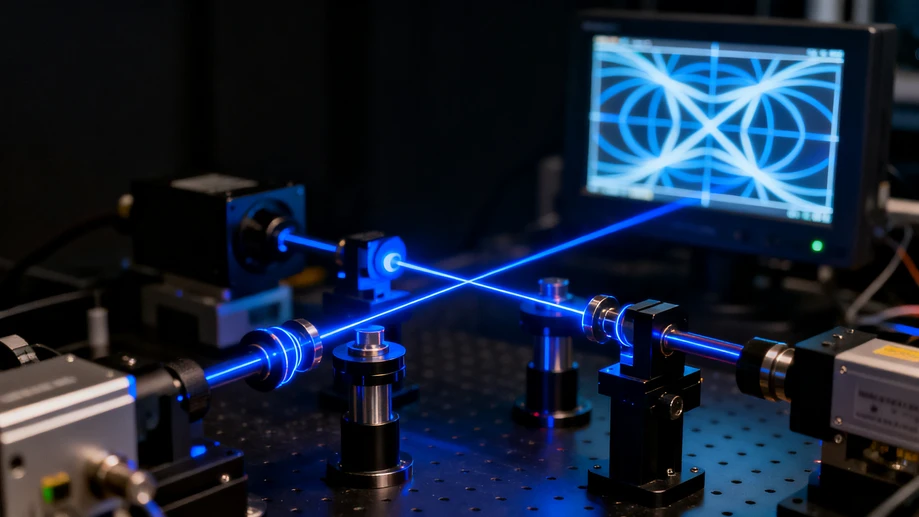
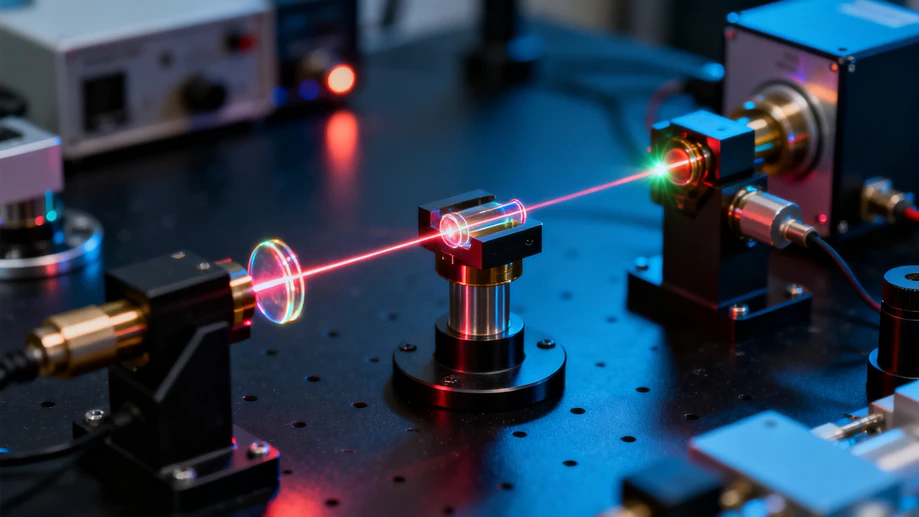
Empirical evidence for quantum entanglement has been accumulated through rigorous experiments, starting with tests of Bell's inequalities in the mid-20th century. These experiments disproved local realism by showing that entangled particles exhibit correlations stronger than any classical theory could predict. Modern demonstrations use sophisticated apparatus, such as interferometers and detectors in cryogenic environments, to isolate entangled photon pairs. Measurements confirm that the correlation coefficients exceed classical limits, with statistical significance often surpassing five standard deviations. For instance, in experiments conducted over fiber-optic networks spanning hundreds of kilometers, entangled photons maintain their linked states, as verified through coincidence counting. Satellite-based tests, like those involving Earth-orbiting platforms, extend these observations to global scales, proving entanglement persists across planetary distances. These findings are consistent across diverse quantum systems, including superconducting qubits in quantum computers, where entanglement is harnessed to perform parallel computations. The robustness of entanglement is further validated by its resilience to noise in quantum communication channels, enabling secure data transmission. Such experimental verifications not only confirm quantum theory but also pave the way for scalable quantum technologies, demonstrating that entanglement is a measurable and controllable phenomenon rather than a theoretical abstraction.
Practical applications of quantum entanglement are transforming multiple fields, leveraging its unique properties for innovation. In quantum computing, entangled qubits form the basis of quantum gates, allowing for exponential speedups in solving complex problems like optimization and cryptography. Algorithms such as Shor's factorization exploit entanglement to break classical encryption methods efficiently. Quantum communication benefits from entanglement through protocols like quantum key distribution, where entangled photons generate unbreakable cryptographic keys immune to eavesdropping. This ensures secure data transfer in networks, with real-world implementations already deployed in financial and governmental sectors. Additionally, quantum sensing utilizes entanglement to enhance precision beyond classical limits, enabling ultra-sensitive detectors for gravitational waves or magnetic fields. For example, entangled atom interferometers achieve unprecedented accuracy in navigation and imaging systems. In medicine, entanglement-based techniques improve resolution in quantum imaging, aiding in early disease detection through non-invasive scans. These applications stem from entanglement's ability to distribute quantum information instantaneously, facilitating advancements in metrology and diagnostics. As research progresses, entanglement-driven technologies promise to revolutionize industries by enabling faster computations, secure global communications, and high-precision instruments, all while adhering to quantum principles for sustainable development.
Quantum entanglement holds profound implications for the future of science and technology, driving exploration into uncharted territories. It challenges conventional understanding of space-time, suggesting that the universe may operate on a deeply interconnected quantum fabric. Future research focuses on scaling entanglement for quantum networks, potentially leading to a quantum internet that interconnects quantum devices worldwide. Innovations in materials science, such as topological insulators, aim to create robust entangled states resistant to decoherence, enhancing quantum memory and processing. Environmental and energy applications include entanglement-enhanced sensors for monitoring climate change or optimizing renewable energy systems. However, unresolved questions persist, such as the role of entanglement in quantum gravity or the nature of wave function collapse. Addressing these could unify quantum mechanics with general relativity, opening doors to new physics. As experimental capabilities advance with technologies like quantum repeaters and error-corrected systems, entanglement will likely underpin breakthroughs in artificial intelligence and biotechnology. Ultimately, this phenomenon not only redefines technological frontiers but also inspires a deeper inquiry into the fundamental structure of reality, promising a future where quantum principles drive human progress in harmony with natural laws.