The Secret Superpower of Solar Panels: Staying Cool to Save the Planet
How your solar panels secretly sweat to generate more clean energy
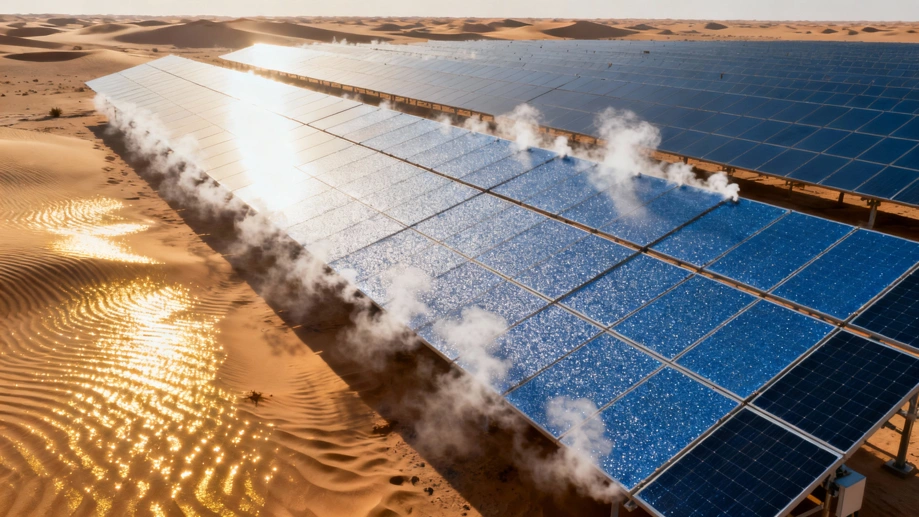
Picture this: a scorching summer day, the sun beating down on rows of solar panels. While it seems like perfect weather for harvesting energy, something counterintuitive happens. Those panels are actually overheating and losing power. Just like your laptop gets sluggish when it runs hot, solar panels become less efficient as temperatures rise. For every degree above 77°F (25°C), panels lose about half a percent of their power-conversion efficiency. That might not sound like much, but on a 100-degree day, you're looking at over 10% wasted energy potential.
This heat paradox has baffled engineers for decades. After all, sunlight contains both photons for electricity creation and infrared waves that just bake the panels. Traditional panels turn about 80% of incoming solar energy into pure heat rather than useful electricity. That's like filling your gas tank only to watch most of it evaporate before you can drive anywhere. As heat builds up, it excites electrons too chaotically for efficient harvesting - like trying to catch individual raindrops in a thunderstorm.
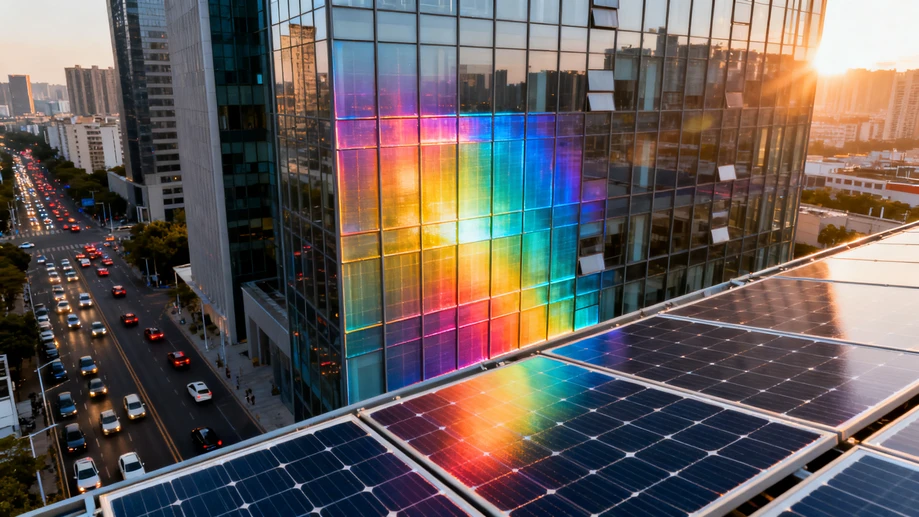
Enter the game-changing world of radiative cooling technology. Scientists recently discovered how to help panels literally chill out using physics tricks. Special coatings applied to solar panels act like cosmic air conditioners, allowing heat to escape directly into space. These metamaterials contain microscopic structures that specifically emit infrared radiation at wavelengths that slip right through Earth's atmosphere. It's essentially creating an invisible thermal escape route to the cold depths of space, something nature can't achieve alone.
The beauty lies in its simplicity - no moving parts, no extra energy required. Picture tiny channels carved into the panel's backside surface. These channels act as thermal waveguides, directing the unwanted heat toward special heat-dissipating materials that glow with infrared light at the perfect frequency to bypass our atmosphere. The effect is so powerful that these "cool solar" surfaces can actually drop below air temperature even under direct sunlight. Imagine leaving your car parked outside on a hot day and returning to find frost forming on the hood.
Field tests show remarkable results with these cooling upgrades. Solar farms incorporating radiative coatings consistently produce 8-12% more annual electricity. That's the equivalent of adding an extra month of premium sunlight without needing more land or panels. In desert installations where temperatures regularly exceed 120°F, the gains are even more dramatic. Maintenance teams report another unexpected benefit: less frequent cleaning needed since cooler surfaces don't bake dust onto the panels as aggressively.
This isn't science fiction - the technology has already leaped from laboratory benches to real-world applications. Water-cooling systems that once seemed promising have largely been abandoned as too complex and resource-intensive. Radiative solutions win by being elegantly passive and durable. Current research focuses on making these "cool skin" treatments even more affordable. Some labs are experimenting with nanoparticle-infused paints that can be sprayed onto existing panels during routine maintenance.
The implications ripple far beyond electricity bills. Widespread adoption could accelerate our transition from fossil fuels by making solar power more productive and economical. Cooler-running panels also last longer before needing replacement, reducing manufacturing demands. In our warming world, every efficiency gain matters when we're racing against climate change. This subtle cooling revolution proves that sometimes the hottest innovations are those designed to keep things cool.