The Quantum Whisper: Why Your Next Computer Won't Have a Switch
Exploring the mind-bending reality where particles exist in multiple states simultaneously
Imagine flipping a coin and having it land as both heads and tails simultaneously until you look at it. This isn't magic – it's the quantum superposition that forms the backbone of quantum computing. Unlike regular computers processing rigid 1s and 0s, quantum machines dance with "qubits" that perform calculations in multiple states at once through this strange phenomenon. The rules governing our everyday world simply don't apply in the quantum realm, where particles flirt with existence in parallel realities.
While superposition allows qubits to multitask dramatically, entanglement links their fates across distances instantly. Picture two coins flipped in separate countries mysteriously landing identical sides up simultaneously, regardless of miles between them. This "spooky action at a distance," as Einstein called it, enables quantum computers to coordinate complex calculations with impossible efficiency. Problems requiring centuries of traditional computing might surrender solutions in minutes through this coordinated quantum choreography.
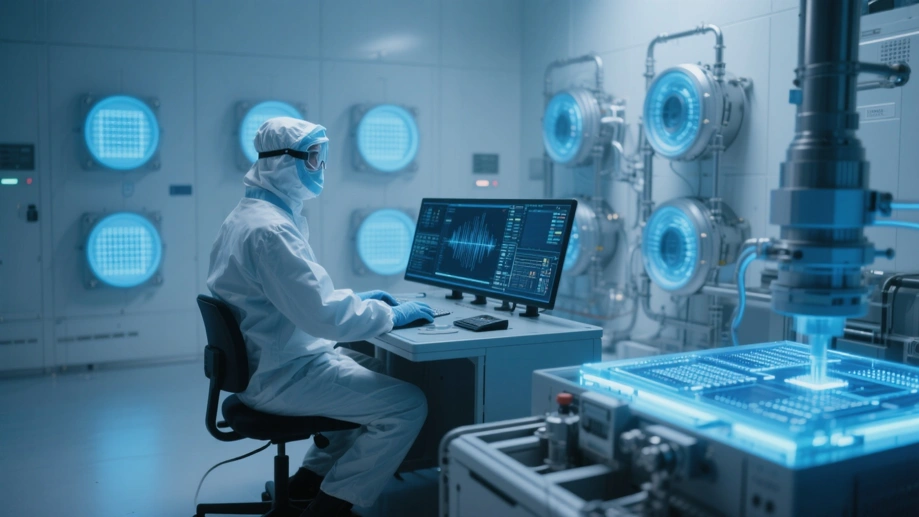
But harnessing quantum weirdness requires extreme conditions. Superconducting quantum chips operate near absolute zero inside specially designed freezers, colder than outer space. At these temperatures, materials shed electrical resistance, allowing qubits to sustain their delicate quantum states. Maintaining this frigid environment demands intricate cooling systems resembling high-tech thermoses, isolating chips from the slightest warmth that would collapse quantum properties.
Engineers face persistent challenges with quantum error correction, as qubits remain exceptionally fragile. Background radiation, magnetic fluctuations, or even stray heat causes "decoherence," where qubits lose their quantum advantages and behave like ordinary bits. Developing error-resistant designs resembles constructing elaborate musical counterpoints – redundant qubits work harmoniously to spot and correct mistakes before calculations derail, preserving quantum coherence.
The potential applications sound revolutionary yet practical. Quantum computers could simulate molecular interactions at atomic scales, accelerating drug discovery for diseases currently untreatable. Financial institutions anticipate optimizing global trading routes and complex investment portfolios almost instantaneously. Beyond technology, quantum approaches might unlock nature's secrets in photosynthesis or superconductivity by directly modeling quantum systems too intricate for traditional supercomputers.
Progress unfolds globally through international research collaborations advancing hardware reliability. Quantum processors with 50-100 qubits now exist, representing infinitesimal fractions of computing power theoretically possible. Cloud platforms allow academic researchers controlled experimentation using real quantum hardware remotely. This accessibility democratizes exploration in a field once confined to specialized labs.
Approaching quantum computing realistically remains crucial despite sensational predictions. Current machines are scientific instruments, not household gadgets. Yet steady progress reveals a fascinating certainty: tomorrow's computing frontier won't resemble yesterday's transistor-based logic. Quantum capabilities promise breakthroughs for humanity's greatest challenges, emerging not through brute silicon force but by harnessing nature's intrinsic quantum whisper.