Could This Rainbow Crystal Power Your Home by 2030?
The rise of perovskite solar cells promises to turn every surface into a clean energy generator
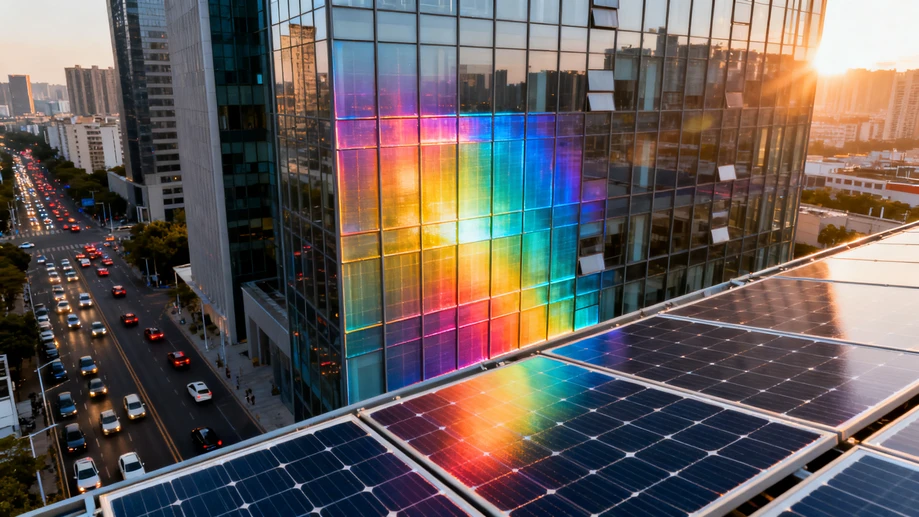
Imagine your morning coffee brewing with electricity harvested from your kitchen window. Sounds like science fiction? Welcome to the perovskite revolution – where glittering crystals thinner than a human hair could soon transform how we power our lives. These remarkable materials aren't just lab curiosities; they're already being tested on city rooftops and might soon coat skyscrapers, turning entire buildings into vertical power plants. Unlike traditional panels that demand rigid installations, perovskite's flexibility allows it to be woven into fabrics, sprayed onto curved surfaces, or laminated between window panes. The potential? Billions of square meters of underutilized surfaces silently generating clean energy while you commute, work, or even relax at home.
What makes perovskite special? Named after Russian mineralogist Lev Perovski, these synthetic crystals have a unique atomic structure that turns them into sunlight-absorbing powerhouses. While silicon solar panels require energy-intensive, high-temperature manufacturing, perovskite cells can be printed like newspaper using simple inkjet printers – dramatically slashing production costs. Surprisingly efficient even in cloudy conditions, they outperform silicon in low-light environments like rainy London or foggy San Francisco. Their party trick? Converting multiple light wavelengths simultaneously, meaning they catch energy from sunrises and sunsets that conventional panels miss. And they keep breaking records: where silicon efficiency plateaued around 22%, perovskite just hit 26% and climbing.
The real magic happens when perovskites meet everyday life. In South Korea, prototype bus stops now sport transparent perovskite roofs that shelter commuters while powering LED displays and charging ports. Fashion designers experiment with perovskite-coated jackets that recharge phones during walks. But the jackpot lies in building integration: imagine entire glass facades of Manhattan skyscrapers replacing their heat-trapping windows with energy-generating smart glass. Companies like Oxford PV already embed perovskite layers onto standard silicon panels, boosting their output by 20% – like giving existing solar farms a free upgrade. Meanwhile, startups develop solar films thinner than plastic wrap that homeowners can peel-and-stick onto roofs without professional installation.
Stability remains the final frontier. Early perovskite cells degraded faster than newspaper in sunlight, dissolving like sugar cubes in rain. But materials engineers now shield them with "armor" – nanostructured barriers preventing moisture invasion while letting sunlight through. Others create self-healing molecules that repair microscopic cracks overnight. In accelerated aging tests, champion cells now endure 30 years – matching silicon's lifespan. Manufacturing breakthroughs emerge monthly: engineers in Switzerland recently printed perovskite strips at blistering speeds of 20 meters per minute, while researchers achieve 99.7% purity using recycled materials. Production costs are projected to plummet to $0.10 per watt by 2027 – a third of today's silicon panels.
The global race is heating up. China leads deployment with perovskite factories scaling like semiconductor plants. Europe just launched "Solar Skins" initiatives funding building-integrated applications. America's Department of Energy bets big with its Perovskite Startup Prize. Analysts predict these crystals will capture 30% of the solar market by 2035, potentially halving solar electricity costs worldwide. As dual-use installations multiply – solar farms sharing land with crops, transparent solar greenhouses nourishing plants while generating power – perovskites could redefine renewable infrastructure. Your next phone screen, car sunroof, or even garden umbrella might quietly harvest sunlight. Power grids won't recognize the difference, but our planet certainly will.