Honey, I Shrunk the Quantum Computer! (Well, Maybe)
How Room-Temperature Qubits Could Reshape Everything You Think You Know About Computing
Imagine the immense power of a quantum computer, capable of simulating complex molecules for revolutionary drug discovery or cracking encryption codes currently deemed unbreakable. Now, picture that computer not as a gigantic, energy-guzzling behemoth tucked away in a specialized lab requiring temperatures colder than deep space, but as something potentially small enough to integrate into other devices or housed in a much simpler facility. The key difference? One word: temperature.
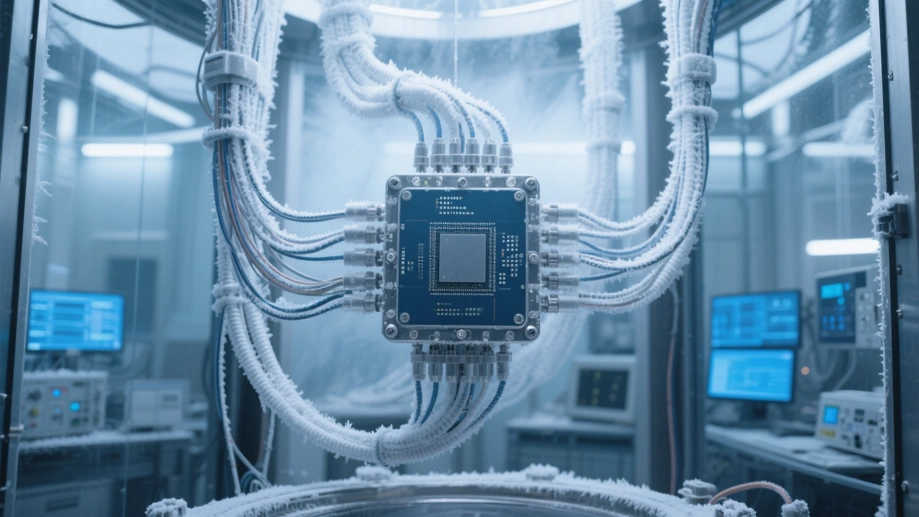
Traditional quantum computers are incredibly finicky machines. Their power comes from quantum bits, or "qubits." Unlike standard bits (0s or 1s), qubits exploit the weirdness of quantum mechanics, existing in a "superposition" where they can be both 0 and 1 simultaneously, and exhibiting "entanglement," where the state of one qubit instantly influences another, no matter the distance. This allows them to explore vast computational possibilities simultaneously. However, keeping qubits stable long enough to perform calculations is a monumental challenge. The most common types, like superconducting qubits, are extremely vulnerable to interference. Any stray heat or electromagnetic noise from the environment – even the tiny vibrations of atoms at room temperature – can cause them to lose their delicate quantum state, a process called "decoherence." To shield them, scientists place these qubits inside elaborate refrigerators, called dilution refrigerators, that chill them down to within a fraction of a degree above absolute zero (-273°C or -459°F). Think colder than the vacuum of space! This setup is bulky, incredibly expensive to build and operate, and represents a massive barrier to making quantum computing widely accessible.
But here's the twist driving a major wave of research: what if we could build qubits that simply don't *need* such extreme cold? The dream is achieving "room-temperature quantum computing." The goal isn't necessarily your cozy living room temperature, but rather qubits robust enough to function reliably without exotic, multi-million-dollar cooling infrastructure – perhaps stable up to, say, -70°C or even higher. Finding the right material that naturally hosts quantum states resistant to environmental noise is the holy grail here.
Fast-forward to recent years, and significant cracks are appearing in the cryogenic barrier. Several promising avenues show incredible potential. One frontrunner involves manipulating imperfections within certain robust crystalline materials like diamond. Diamond isn't just pretty; its incredibly strong structure can house tiny imperfections where electrons can be trapped. Specific imperfections, like a missing carbon atom next to a nitrogen atom (forming a "nitrogen-vacancy" or NV center), can behave as isolated qubits. Crucially, some of these "solid-state" systems have demonstrated the ability to maintain their quantum state for useful durations at temperatures achievable with much simpler (and cheaper) refrigeration, like cryocoolers using liquid nitrogen. It's a huge leap from needing to flirt with absolute zero.
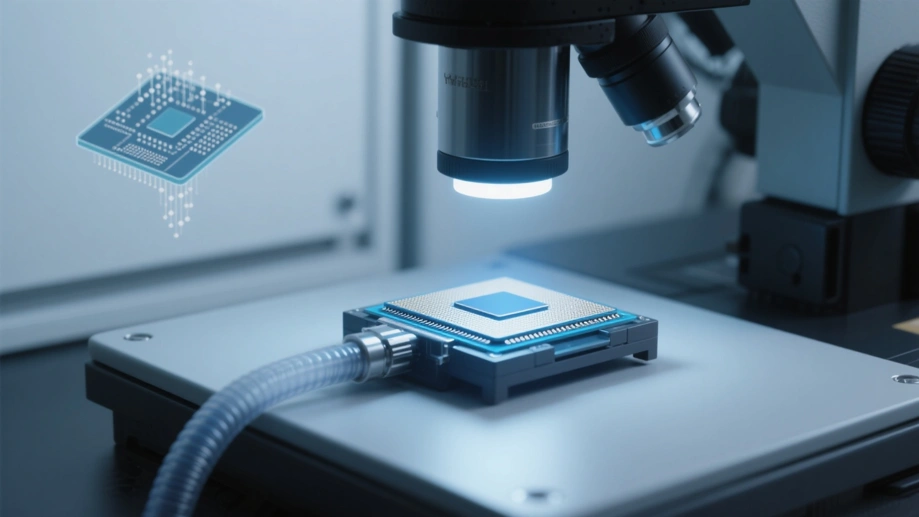
Another exciting contender involves leveraging the unique properties of special semiconductors, particularly materials known as quantum dots or potentially layered structures like graphene. These are tiny structures engineered on silicon chips where the movement of individual electrons or "excitons" (electron-hole pairs) can potentially be controlled to represent quantum states. While still requiring low temperatures, breakthroughs suggest operating temperatures rising significantly. Crucially, since the core technology often builds upon existing semiconductor manufacturing processes, scaling up production could become far more feasible than superconducting systems. Think less like building a bespoke, cathedral-like structure and more like iterating on techniques already mastered by the chip industry.
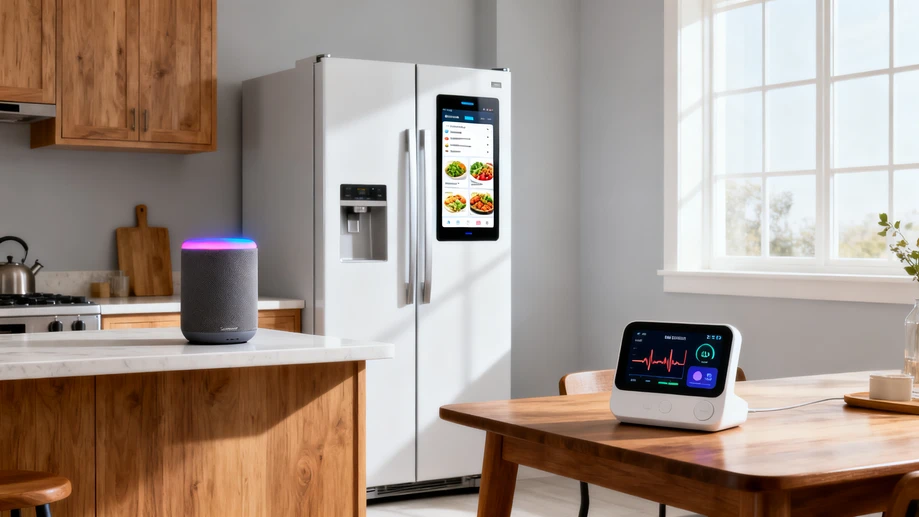
So, why get excited about the thermostat being turned up? The implications are staggering. Removing the ultra-cold barrier drastically shrinks the size and slashes the cost of quantum computing hardware. It opens the door to potentially embedding quantum sensors in more places – think super-accurate navigation without GPS, or biomedical scanners detecting minute cellular changes. We might eventually see small, specialized quantum accelerators integrated into conventional data centers, tackling niche tasks rather than being standalone monsters. It fundamentally changes the timeline and accessibility of this technology, moving it from remote labs potentially closer to broader engineering communities. While we're not talking about pocket quantum computers running video games next week, the path to practical, powerful quantum machines is looking significantly more direct. Researchers are tirelessly tweaking materials, finding new defects, engineering better structures, and refining control methods. Each incremental rise in operating temperature is a victory.
The transition from building delicate quantum curiosities locked in frigid fortresses to potentially robust, more practical quantum devices isn't just incremental; it's a paradigm shift. Think of it like the leap from vacuum tube computers, needing vast rooms and constant cooling, to the solid-state silicon transistor. It's about moving quantum computing from the realm of the exquisitely fragile and profoundly expensive into something that could eventually become an integrated, usable tool. Room-temperature quantum computing might still be years away, but the physics underpinning its potential is no longer science fiction. The race is on, and the finish line just got a lot warmer.