How Do Self-Driving Cars Actually "See" the Road?
Unpacking the sensory superpowers that let autonomous vehicles navigate our world
Picture a car effortlessly gliding through rush-hour traffic, making split-second decisions without human intervention. The magic lies in its artificial senses — a network of advanced sensors acting as digital eyes and ears that constantly scan and interpret the environment. Unlike human drivers relying on just two biological cameras, these machines combine multiple technologies to create a comprehensive understanding of their surroundings. It's a technological ballet happening in real-time, where radar beams bounce off objects, lidar pulses paint 3D landscapes, and cameras capture visual details with machine-learning precision.
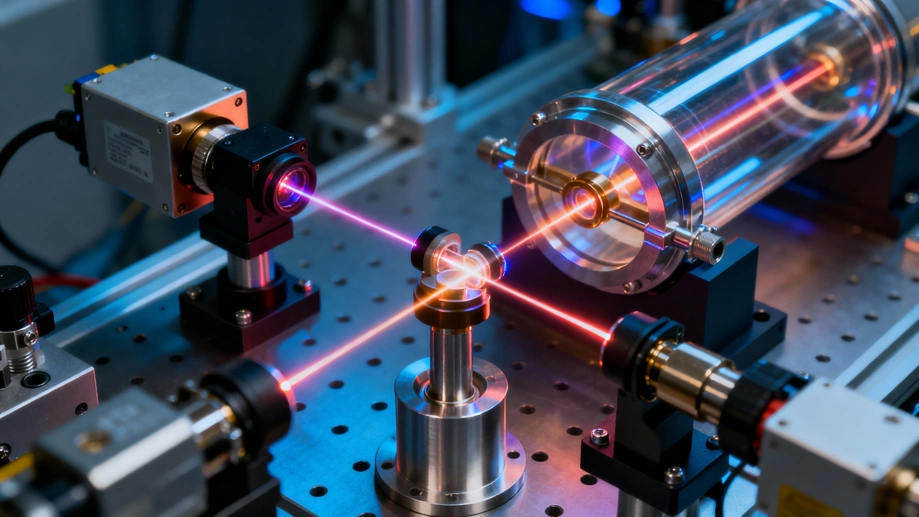
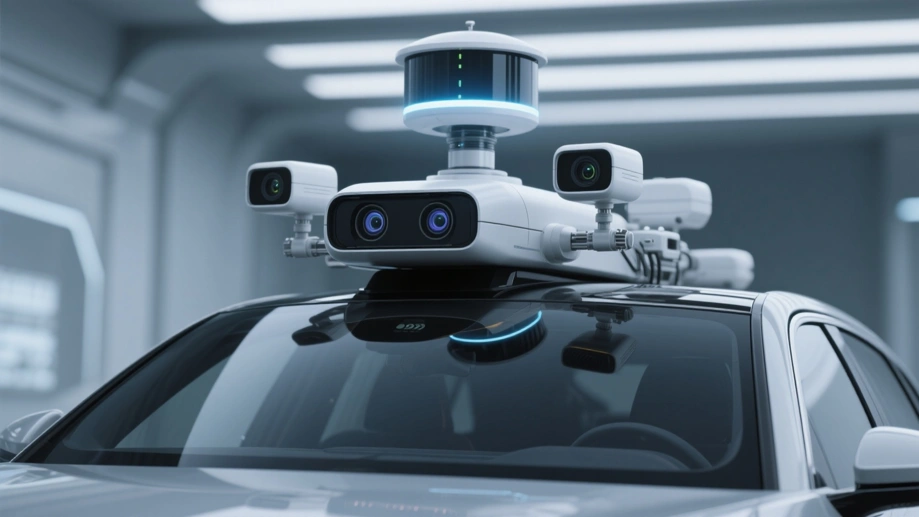
At the heart of this sensory system sits lidar technology — spinning laser arrays mounted atop vehicles like futuristic crowns. These units emit over a million laser pulses per second, each one bouncing back to create intricate point clouds that map the world in precise three dimensions. Unlike cameras that struggle with darkness or glare, lidar creates reliable depth maps regardless of lighting conditions. Down in the bumpers, radar units complement this vision by tracking object movements through Doppler shifts. Their radio waves cut through rain and fog with ease, constantly calculating how fast that bicycle messenger is approaching your left flank.
While lidar builds the world in depth points and radar handles motion tracking, optical cameras provide the crucial visual context. Modern systems employ multiple high-resolution cameras with fish-eye lenses covering every angle. Sophisticated neural networks analyze these feeds in real-time, recognizing traffic lights, reading road signs, and distinguishing pedestrians from lampposts. Remarkably, today's image recognition can identify a brake light activation faster than a human reflex. Together, these sensors create overlapping fields of perception, each technology compensating for others' limitations.
Raw sensor data alone isn't enough — the real magic happens in sensor fusion. Advanced algorithms continuously correlate inputs from all sources, discarding discrepancies while reinforcing consistent signals. Imagine hundreds of sensor reports flooding the central computer every millisecond: a lidar cluster suggests an obstacle ahead while the camera sees only shadows. The fusion system weighs probabilities and decides whether to brake. This constant cross-referencing creates what engineers call "situational awareness" far exceeding human capabilities in some aspects, like 360-degree monitoring or calculating trajectories of multiple moving objects simultaneously.
Despite these technological marvels, current systems face real-world limitations. Heavy downpours can confuse lidar with countless raindrop reflections, while sun glare might blind cameras facing the horizon during sunset. Sensor fusion helps mitigate these issues but can't eliminate them entirely. That's why developers employ "edge case" testing in extreme environments, from Arizona deserts to Norwegian snowfields. When sensors disagree during sudden events like a ball bouncing into the street followed by a chasing child, the system's response depends entirely on programming priorities and pattern recognition accuracy.
Looking ahead, sensor technology keeps advancing. Next-generation lidar is shrinking from rooftop spinning units to thumbnail-sized chips that could eventually hide behind windshields. Higher-resolution radar promises to distinguish between a tumbleweed and a small animal at greater distances. Camera systems now incorporate thermal imaging that sees body heat signatures, potentially detecting pedestrians hidden behind parked cars. As processing power increases exponentially while sensor costs decrease, what once required luxury-car budgets will likely become standard safety equipment, quietly revolutionizing transportation from factory floors to farm roads.
The invisible ecosystem enabling autonomous perception represents one of modern engineering's most fascinating achievements. Unlike sci-fi portrayals of self-driving cars as single-mind entities, they're actually sophisticated sensory organisms interpreting the physical world through layered digital senses. This technology doesn't replace human judgment but extends perceptual capabilities beyond biological limits — constantly scanning, correlating, and predicting with tireless precision. As sensors evolve to better handle environmental surprises, they'll increasingly blend into our transportation landscape until their once-remarkable capabilities simply become how cars see.