The AI Whisperer: How Artificial Intelligence is Taming Offshore Wind Farms
Unlocking the Secrets of the Sea for Cleaner, Smarter Energy
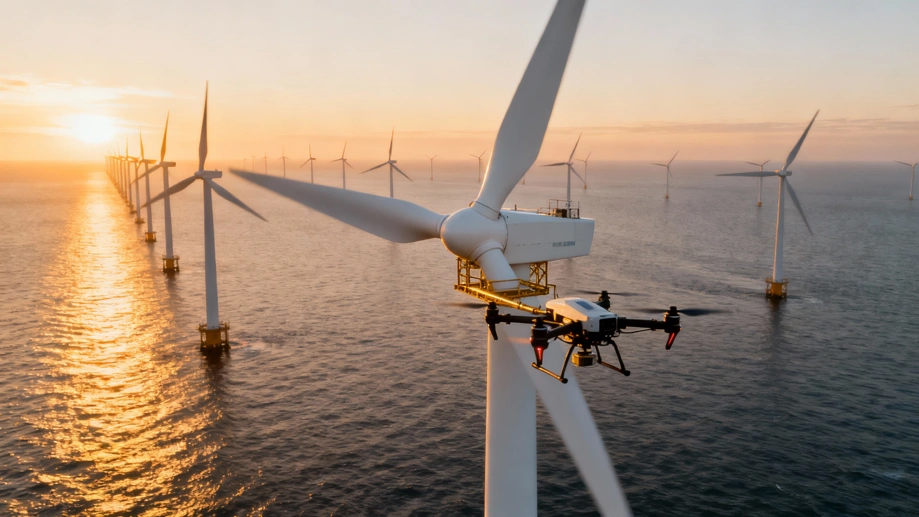
Imagine giant wind turbines standing like sentinels in the open ocean, their blades slicing through salty air. These offshore wind farms are crucial warriors in the fight against climate change, generating vast amounts of clean electricity. But the ocean is a harsh and unpredictable master. Massive waves crash against foundations, salt spray corrodes metal, and sudden wind gusts stress equipment. Keeping these colossal machines running smoothly miles out to sea used to be a constant, expensive battle filled with surprises. Unexpected breakdowns meant risky and costly repair missions by boat or helicopter, while inefficient operations wasted precious energy potential. It seemed like an unavoidable challenge of harnessing the power of the sea.
Enter the unsung hero of modern wind farms: Artificial Intelligence (AI). These complex computer systems are transforming how we manage renewable energy. Offshore turbines are packed with sensors, silently recording everything from vibration levels deep within the gearbox and subtle temperature shifts in the generator, to the exact pitch angle of each blade and the intensity of incoming winds. Every shift, every hum, every change is documented millions of times per day. Before AI, this data flood was overwhelming. Engineers might spot a trend only *after* a component failed. It was like trying to predict a storm by watching a single cloud.
This is where AI performs its magic. Sophisticated algorithms act like tireless detectives, sifting through the mountain of sensor information in real-time. Trained on vast datasets – both historical records and live inputs – these AI models learn the unique "healthy heartbeat" of each turbine. They can identify minuscule anomalies invisible to the human eye. A slight vibration pattern change detected within a specific temperature range? The AI flags it immediately, comparing it instantly to patterns preceding past gearbox failures. Instead of reacting to a blown transformer days or weeks after subtle signs emerged, engineers get a precise warning: "Possible cooling system degradation detected on turbine #34. Recommend inspection within 14 days." This shift from reactive repairs to predictive maintenance is revolutionary.
The benefits resonate far beyond just avoiding breakdowns. AI doesn't just diagnose problems; it actively optimizes power production. It constantly analyzes wind speed, direction, and turbine performance across the entire farm. Using this intelligence, the system makes micro-adjustments to individual turbines. It might slightly tilt a blade to catch more wind energy during steady breezes, or angle it to reduce stress during dangerous gusts. It can even adjust the collective behavior of the turbines – strategically orienting some to reduce turbulence experienced by others downwind. These seemingly tiny tweaks, multiplied across hundreds of turbines operating 24/7, compound into massive efficiency gains. Experts estimate predictive maintenance powered by AI can reduce operational costs by up to 15%, while optimized power output can boost overall energy yield by another 8-10%. That’s significantly more clean electricity feeding into the grid without adding a single extra turbine.
Looking ahead, the synergy between AI and offshore wind is poised to grow even deeper. The next frontier involves combining AI with live ocean and weather satellite data. Imagine an AI system that not only monitors the turbines themselves but also integrates forecasts for wave height, ocean currents, and approaching severe weather patterns. This predictive powerhouse could automatically position turbine blades to endure an incoming storm safely or plan complex maintenance windows for calm sea conditions weeks in advance. Such advancements promise longer operational lifespans for expensive equipment and safer working conditions for maintenance crews who brave the elements. This technology is rapidly becoming the essential nervous system for large-scale offshore wind installations.
The story unfolding in these offshore wind farms offers a compelling glimpse into the practical, transformative power of AI. It’s not about creating sentient robots; it’s about deploying sophisticated software to solve tangible problems inherent in generating renewable energy. By giving us predictive insights into maintenance and unlocking unprecedented levels of operational efficiency, AI is making offshore wind power more reliable, more cost-effective, and ultimately, a more formidable and indispensable force in our transition to a sustainable energy future. These tireless digital guardians are helping us unlock the full potential of the wind, making clean energy from the ocean a far less turbulent prospect.