Quantum Confusion: Why Your Coffee Machine Isn't About to Solve Cosmic Riddles
Unpacking the Hype Behind Quantum Computers and What They Actually Do Today
You've probably heard the buzz – quantum computers will crack unbreakable codes, simulate entire universes, and make your smartphone look like an abacus. But hold on a second before you toss out your laptop. The reality of quantum computing is far less glamorous and infinitely more fascinating than sci-fi promises. Let's peel back the layers of exaggeration to reveal why these machines won't be calculating your taxes or ordering pizza anytime soon.
First, the basics matter. Unlike classical computers processing 0s or 1s, quantum computers use "qubits". These qubits exploit quantum mechanics' weirdness: they can be both 0 AND 1 simultaneously (superposition) and influence each other instantly across vast distances (entanglement). This allows them to explore countless solutions to a problem at once. Imagine finding a single specific grain of sand on all the beaches on Earth – a classical computer checks each grain one-by-one, while a quantum computer examines them all simultaneously. Powerful? Absolutely. Practical yet? Not quite.
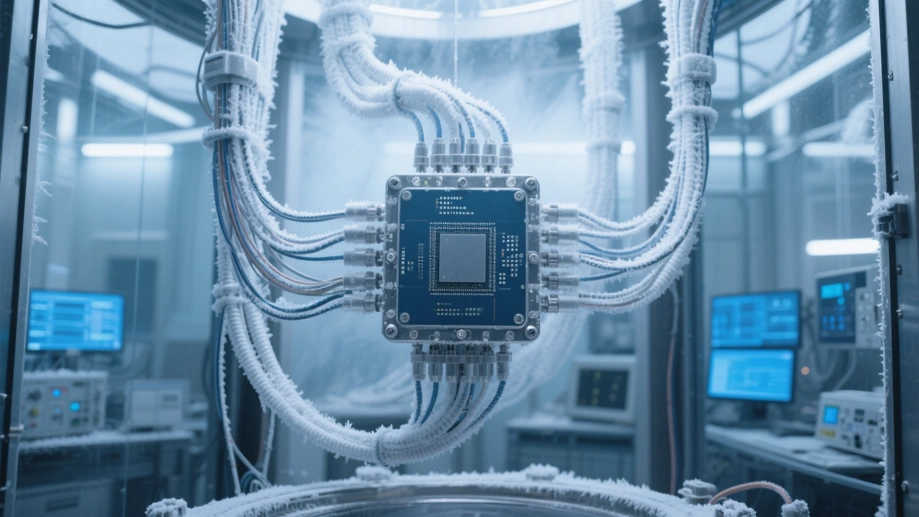
Here's where reality bites hard. Maintaining qubits requires conditions colder than deep space, around -273°C. A stray vibration, a cosmic ray, even a whisper of warmth can shatter their delicate quantum state in a phenomenon called "decoherence". Current quantum computers resemble intricate chemistry experiments more than shiny gadgets, spending most of their energy just keeping their qubits stable enough to function for microseconds. Think of it like balancing a pencil perfectly on its tip during an earthquake – possible briefly, but wildly unstable.
Then comes the error avalanche. Quantum operations are inherently noisy. Every calculation risks corruption. To compensate, engineers drown the fragile quantum data in a sea of extra qubits solely dedicated to error correction. A useful quantum computer might need thousands or millions of qubits just to reliably manage the output of a few dozen doing the actual work. We're currently in the "Noisy Intermediate-Scale Quantum" (NISQ) era – impressive lab demonstrations exist, but robust, large-scale applications remain distant.
So, what *can* they realistically do right now? Specialized tasks, mostly. One promising area is simulating complex molecules. Simulating how a new drug interacts with every atom in a protein could accelerate pharmaceutical discoveries immensely, something even the largest supercomputers struggle with. Quantum computers might also optimize fiendishly complex systems like global logistics networks or untangle chaotic financial models faster than classical machines, leading to incremental efficiency gains in specific sectors.
The bridge between quantum theory and useful machines is still under construction, brick by painstaking brick. Every small improvement in qubit stability, error correction codes, or system control is a major triumph. Forget the doomsday predictions of instantly broken encryption – current encryption standards rely on problems too complex for today’s fragile quantum machines. Developing "quantum-resistant" cryptography is a priority, but it's preventative, not reactive.
Quantum computers aren't replacements; they'll likely be specialized co-processors. Picture a toolbox: your trusty screwdriver (classical computer) handles most jobs perfectly, but occasionally you need a specialized torque wrench (quantum processor) for a niche task impossible otherwise. They excel at exploring probabilities and relationships simultaneously on a scale classical logic simply cannot match. Expect them to power breakthroughs in material science, chemistry, and complex optimization long before they touch everyday applications.
The true wonder lies not in imminent world domination, but in our ability to harness quantum weirdness at all. Building these machines pushes physics, materials science, and engineering to their absolute limits. Every extra stable qubit represents a monumental human achievement in controlling the unruly quantum realm. While tomorrow's quantum chips won't brew coffee or browse the web, their quiet hum today symbolizes our profound progress in manipulating the fundamental fabric of reality itself – and that’s genuinely groundbreaking.