Banana Breakthrough: Snipping Away the Threat of Panama Disease
How gene editing is rewriting the fate of the world's favorite fruit
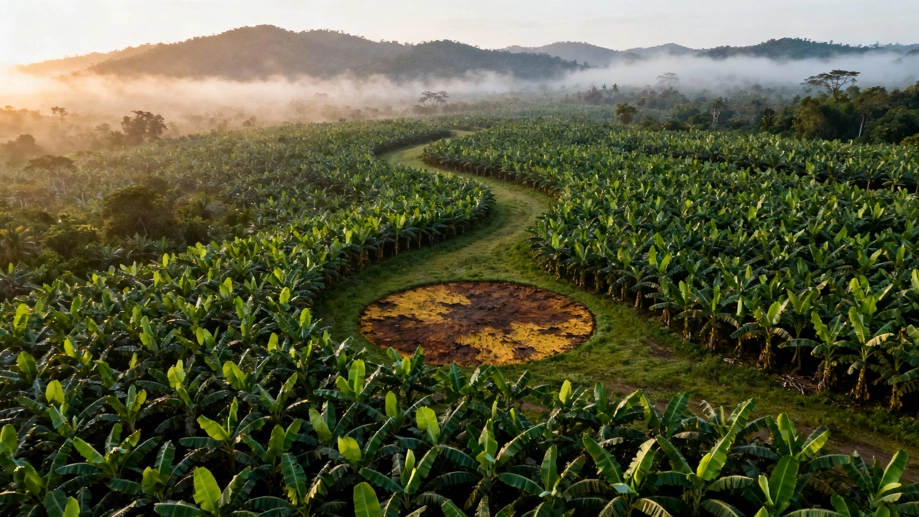
Picture biting into a creamy, sun-ripened banana – that simple pleasure enjoyed by billions could vanish from our kitchens. Lurking beneath the tropical soil, Panama Disease Tropical Race 4 threatens to wipe out entire banana plantations. This soil-dwelling fungus clings to roots like invisible shackles, choking plants from within. Farmers worldwide watch helplessly as entire groves turn into graveyards of withered leaves, helpless against a microscopic enemy that survives for decades in dirt. What if we could arm these vulnerable plants with their own microscopic shields?
For decades, scientists relied on crossbreeding to fight such diseases, a slow dance of pollen transfer between wild and domestic varieties. Yet bananas face a unique hurdle – nearly all commercial bananas come from sterile, seedless clones of the Cavendish variety. It’s like trying to reinvent the wheel without spare parts. Traditional breeding hits a wall because desirable traits get tangled with unwanted flaws. Imagine transferring disease resistance only to end up with banana bunches the size of your thumb or fruit that tastes like cardboard. The genetic lottery rarely pays off.
CRISPR gene editing swoops in as a molecular scalpel for this exact problem. Unlike earlier genetic tinkering that added foreign genes, this modern approach simply tweaks the plant’s existing DNA library. Picture scanning nature’s cookbook to find the recipe for resilience, then making a subtle ingredient adjustment. Researchers pinpoint sections of DNA that make bananas vulnerable – perhaps a doorway molecule on root cells that mistakenly welcomes the fungus. With CRISPR precision, they snip or tweak those specific genetic words, leaving the rest of the plant’s story untouched. No foreign genes introduced, just nature’s script polished.
The magic unfolds in unexpected places. Instead of sterile labs, researchers work in steamy greenhouses where humidity clings to every surface. Young banana plants stand guard in rows, their broad leaves reaching for artificial sunlight while scientists monitor their roots like anxious parents. Within weeks, proof emerges: edited plants thrive in fungus-infested soil while unedited neighbors yellow and slump. Their root systems remain snow-white and vigorous, untouched by the invading enemy. These silent victories matter more than lab reports when global food security hangs in the balance.
Beyond disease resistance, biotechnology promises fruit revolutions. Imagine oranges engineered to withstand bitter cold snaps in Georgia orchards, or grapes that laugh at powdery mildew without chemical sprays. Drought-tolerant mango trees could flourish in parched regions where water is gold. By manipulating tiny genetic switches, scientists coax plants into producing more flavor compounds – think pineapples with explosive sweetness or strawberries bursting with perfume. The technology doesn’t just solve problems; it elevates the eating experience.
Not everyone celebrates this brave new fruit bowl. Some worry about unintended genetic echoes – could snipping one gene unknowingly mute another? That’s where exhaustive taste trials and safety checks come in. Plants endure rigorous scrutiny before reaching grocery aisles, undergoing more testing than naturally bred varieties ever faced. Other concerns involve ecological balance; sterile super-bananas won’t spread rogue genes because, well, they’re seedless clones. The irony? Organic bananas face more environmental risks from constant fungicide sprays than edited trees face from their own DNA.
The fruit evolution story marches on. Researchers now explore stacked edits – combining disease resistance with extended shelf life or enhanced nutrition. Picture bananas that resist bruising during transport while packing extra vitamins, reducing waste and boosting health. This isn’t distant sci-fi; experimental groves already showcase banana trees loaded with robust fruit where Panama Disease once ruled. As climate change intensifies plant stresses, these tiny genetic tweaks may become our sturdiest shield – ensuring generations ahead can still savor that perfect sunrise-yellow curve of sweetness.