What is Quantum Entanglement and How Does It Revolutionize Physics?
Unraveling the invisible link between particles that enables instant communication across space, reshaping our understanding of the universe.
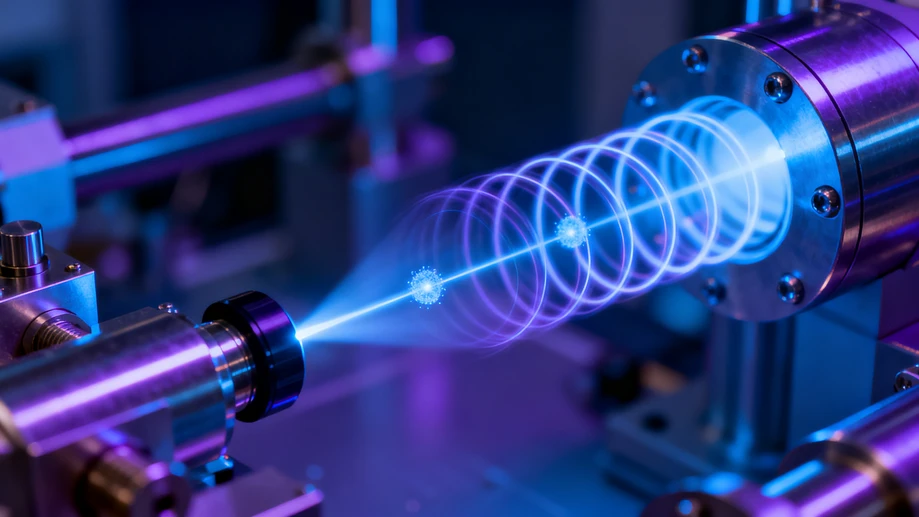
Quantum entanglement stands as one of the most perplexing phenomena in modern physics, where two or more particles become inextricably linked in such a way that the state of one immediately influences the other, regardless of the distance separating them. This phenomenon, first mathematically described by Albert Einstein, Boris Podolsky, and Nathan Rosen in 1935 through the EPR paradox, defies classical intuition. In a classical view, objects communicate through local interactions and signals traveling at or below light speed, but entanglement implies a non-local connection where changes occur faster than light. At its core, entangled particles share a combined quantum state; when one particle's property (such as spin or polarization) is measured, the other's state instantaneously collapses to a correlated value, even if they are light-years apart. This instantaneous correlation challenges the very foundations of Newtonian physics and introduces concepts like quantum superposition, where particles exist in multiple states simultaneously until observed.
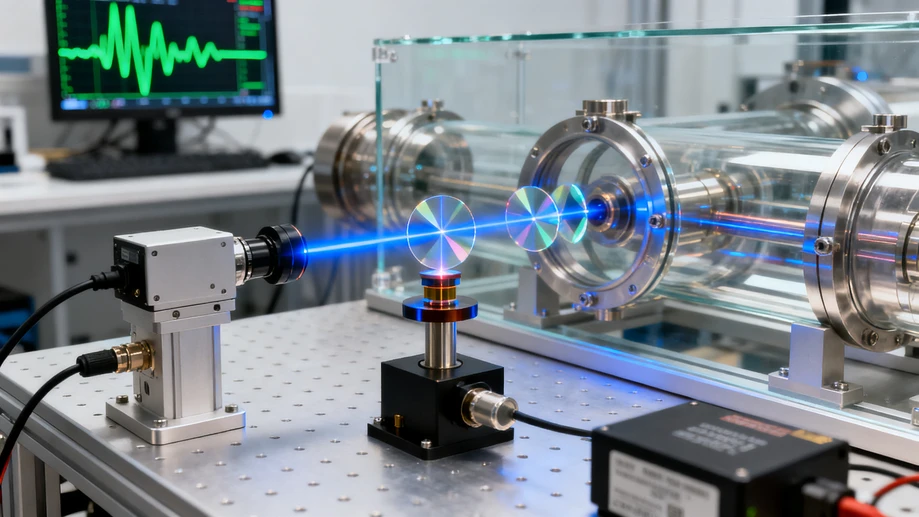
The experimental validation of quantum entanglement began in earnest during the 1960s with John Bell's theorem, which provided a mathematical framework to test whether such correlations could be explained by hidden variables. Bell's inequalities set a boundary: if violated, it would confirm entanglement's non-local nature. In 1982, Alain Aspect conducted landmark experiments using entangled photons, where their polarizations were measured in different directions. The results consistently violated Bell's inequalities, offering robust evidence that entangled particles do not rely on pre-determined properties but exhibit true quantum correlations. Subsequent experiments have scaled this phenomenon, from lab-based setups with lasers and crystals to large-scale projects like satellite-based quantum communication networks, where entangled particles are beamed through space to demonstrate feasibility over thousands of kilometers. These experiments not only affirm entanglement's reality but also highlight its resilience against environmental noise, a crucial factor for practical applications.
Understanding the principles of quantum entanglement reveals profound implications for technology and science. Entanglement relies on quantum mechanics' probabilistic nature, where particles are described by wave functions that entangle when they interact or are created together. Once entangled, any measurement on one particle causes the wave function to collapse instantaneously for the other, a process governed by the principle of quantum non-locality. This underpins emerging technologies such as quantum computing, where entangled qubits (quantum bits) enable parallel processing at unprecedented speeds. For example, quantum algorithms can solve complex problems like factoring large numbers or simulating molecular interactions far faster than classical computers. Additionally, quantum cryptography exploits entanglement for ultra-secure communication; since any eavesdropping attempt disrupts the entangled state, it triggers immediate detection, ensuring unbreakable encryption. Beyond computing, entanglement is vital in quantum teleportation protocols that transfer quantum states without physical movement, potentially revolutionizing data transfer in future networks.
Despite its revolutionary potential, quantum entanglement faces significant challenges that scientists continue to explore. One major issue is decoherence, where environmental interactions (e.g., heat or electromagnetic fields) disrupt the fragile entangled state, causing errors in practical devices. Researchers are developing error-correction techniques and ultra-cold environments to mitigate this, as seen in quantum computers using superconducting circuits cooled near absolute zero. Another frontier is the exploration of entanglement in macroscopic systems, moving beyond single particles to larger objects; recent experiments with tiny diamonds or molecules show promising signs, but scaling up remains daunting due to increased sensitivity to disturbances. Future directions include harnessing multi-particle entanglement for advanced sensors, such as quantum gravimeters that detect minute gravitational waves, or probing quantum gravity theories to unify physics. However, fundamental questions persist, like reconciling entanglement with relativity, as the instantaneous effect seemingly contradicts relativity's speed limit, sparking debates on "quantum causality" and the nature of space-time.
In the broader scientific landscape, quantum entanglement exemplifies the boundary-pushing nature of quantum mechanics, offering a gateway to unexplored realms of reality. Its counterintuitive aspects—such as "spooky action at a distance," as Einstein famously called it—continue to captivate both researchers and the public, driving educational outreach that demystifies quantum concepts for broader audiences. As research progresses, entanglement not only promises technological leaps but also deepens our philosophical understanding of interconnectedness in the cosmos. This ongoing journey underscores that quantum phenomena are not mere theoretical curiosities but tangible forces shaping the next frontier of innovation, with entanglement serving as a cornerstone for the quantum revolution that will redefine 21st-century science.