Could Your Next Favorite Outfit Be Printed from Living Cells?
How Biofabrication Is Weaving the Future of Fashion and Medicine
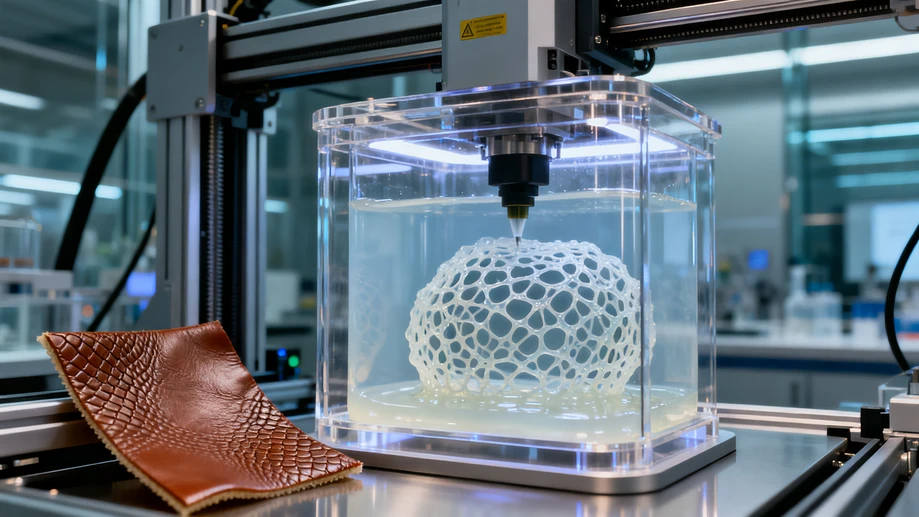
Imagine slipping into a dress that feels like silk but was grown, not woven. This isn't science fiction; it's the cutting edge of biofabrication. Scientists and designers are collaborating to print materials using living cells, creating textiles that are alive. These bio-printed fabrics start with bio-inks – gels packed with human skin cells, algae, or even fungi. Loaded into specialized 3D printers, these inks are meticulously layered into intricate patterns dictated by digital designs. The real magic happens during the incubation period, where the cells multiply and fuse, forming cohesive, flexible sheets. Early prototypes showcased at tech expos resemble delicate lace or structured leather, proving that living materials can achieve remarkable aesthetics and textures. The vision extends beyond catwalks: imagine self-healing jackets that repair small tears or shirts that adapt their breathability to your sweat levels.
While the fashion applications capture headlines, the most profound impact of 3D bioprinting is unfolding in hospitals. The ability to print with living cells is revolutionizing regenerative medicine. Researchers are creating patient-specific tissues and even simple organs. Skin bioprinting offers immense promise for burn victims. Instead of painful skin grafts, a scanner maps the wound, and a bioprinter deposits layers of the patient's own skin cells directly onto the damaged area, accelerating healing and reducing scarring dramatically. Similarly, bioprinted cartilage patches are being tested to repair damaged knees, offering hope for osteoarthritis sufferers. The holy grail remains printing complex vascularized organs like kidneys or liver patches, a challenge requiring immense precision to replicate the intricate network of blood vessels. While full organs are still years away, bioprinted tissues are already used for incredibly accurate drug testing, predicting human reactions far better than animal models.
Biofabrication isn't just about creating novel materials; it's a potential game-changer for sustainability. Traditional textile manufacturing is notoriously resource-intensive and polluting, consuming vast amounts of water, chemicals, and energy. Leather production, in particular, has significant environmental and ethical concerns. Bioprinted leather alternatives, grown from mushroom roots or animal cells without raising livestock, offer a cruelty-free solution with a drastically lower environmental footprint. These materials decompose naturally at the end of their life cycle, unlike synthetic fabrics shedding microplastics. Furthermore, biofabrication operates closer to ambient conditions than the extreme heat and pressure needed for synthetic polymers, slashing energy use. Imagine a future where your shoes are grown from microbes and your bag from pineapple leaf cells – high-performance products leaving almost no trace on the planet.
Despite the dazzling potential, scaling biofabrication faces significant hurdles. Cost remains a major barrier. The nutrient-rich broths needed to feed living cells during printing and maturation are expensive, and the bioprinters themselves are highly specialized equipment. Printing large, complex structures reliably and quickly is another engineering challenge; current speeds are far slower than conventional manufacturing. Regulatory pathways also need development. How do we certify the safety and durability of living materials used in clothing or medical implants? Ensuring consistent quality and overcoming potential biological contamination risks are crucial. Ethical questions arise too, particularly regarding the use of human cells. Clear frameworks are needed to govern sourcing and consent. Overcoming these obstacles requires continued cross-disciplinary collaboration between biologists, engineers, material scientists, and ethicists.
The journey of biofabrication is accelerating rapidly. Startups are emerging, focusing on everything from lab-grown leather for luxury handbags to bioprinted meat. Major sportswear brands are investing heavily, exploring performance apparel derived from nature. In medicine, bioprinted tissues are inching closer to clinical trials for complex applications. As technology advances, costs will decrease, processes will become more efficient, and novel bio-inks derived from sustainable sources like algae will emerge. The convergence of AI for design optimization and robotics for precise handling will further propel the field. Within a decade or two, items grown from cells – whether a personalized skin graft, a toxin-filtering airbag grown from moss, or a biodegradable dress – could transition from lab curiosities to items we encounter in our daily lives, fundamentally reshaping manufacturing, medicine, and our relationship with the material world.