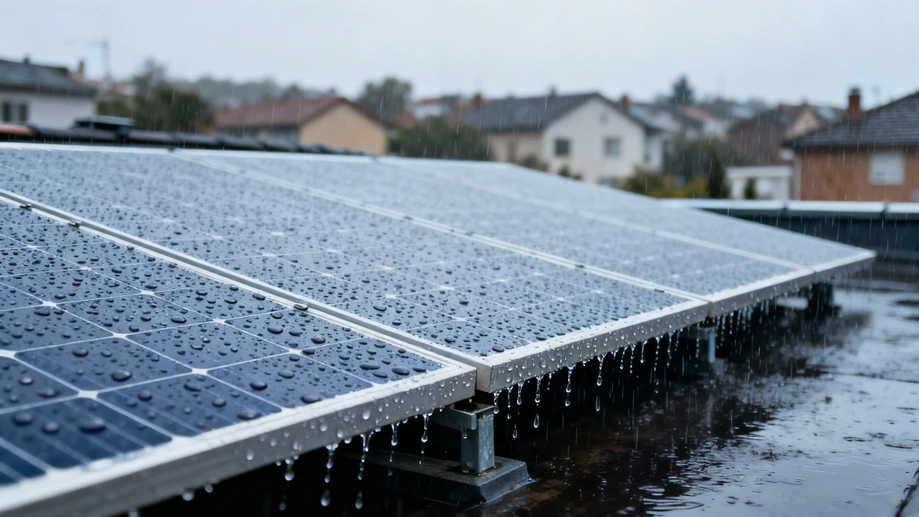
Solar Power's Sneaky Superpower: Harvesting Energy on Cloudy Days
Why rainy weather won't stop your panels from generating electricity
Ever glance at your solar panels during an overcast day and assume they're taking a coffee break? Think again. While it's true solar cells perform best under direct sunlight, they don't completely shut down when clouds roll in. In fact, modern panels maintain about 10-25% productivity even under thick cloud cover. The secret lies in how these sophisticated systems capture and convert different wavelengths of sunlight scattered through our atmosphere.
Clouds don't block all sunlight; they scatter it. Instead of direct beams hitting panels head-on, photons get diffracted through water vapor and ice crystals. This creates ambient light flooding in from all directions. Today's photovoltaic cells contain multiple layers specifically engineered to capture these indirect rays. The top layer absorbs intense blue light during sunny periods, while lower layers are optimized to catch longer red and infrared wavelengths that penetrate cloud cover more efficiently. It's like having built-in backup sensors.
Here's where it gets truly fascinating. That diffused light creates unique advantages. High noon sunshine can overheat panels, making them less efficient. Cloudy conditions provide natural cooling, keeping cells in their ideal operating temperature range. Research reveals panels can experience efficiency bumps of up to 5% during these temperate overcast periods. So while overall output decreases, the system works smarter under cloud cover by avoiding productivity-sapping heat buildup.
Regional data confirms this hidden capability. Surprisingly, solar installations in famously cloudy places like Scotland and Oregon generate substantial annual energy, thanks to this diffuse light collection ability. Engineers now design "cloud-tolerant" systems that strategically angle panels to capture sideways-scattering light during overcast conditions rather than exclusively optimizing for direct sun. This evolutionary tweak significantly boosts output in temperate climates.