Is Your Game Controller Reading Your Mind?
How biofeedback tech is turning your heartbeat into the ultimate gaming advantage
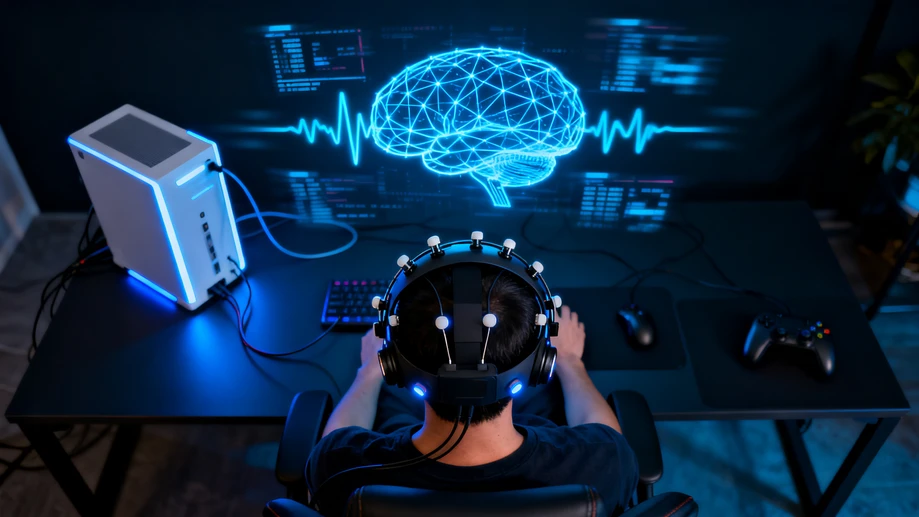
Your palms sweat, your heart pounds, and your character just died - again. But what if your game could sense that rising panic before you do? Enter biofeedback gaming, where your own physiology becomes the controller. Forget button mashing; the next generation of games monitors your heart rate variability, skin conductivity, and even brainwave patterns to dynamically adjust gameplay. When your pulse spikes during a horror sequence, the game might actually slow down the approaching zombie horde. Or if your focus wavers during a puzzle, subtle visual cues could guide your attention. This isn't science fiction - affordable EEG headsets and camera-based pulse detection are already bringing physiological gaming into living rooms.
Major studios are experimenting with biometric integration that goes beyond simple difficulty tweaks. Imagine a racing game where your car handles differently when stress hormones flood your system, or a strategy title where your troops' morale mirrors your calmness. During playtests for an upcoming stealth title, developers discovered players' breathing patterns reliably predicted risky moves seconds before they happened. Now that game adjusts enemy patrol routes based on respiratory data. The tech even shows therapeutic potential: clinical trials use biofeedback games to help anxiety patients practice emotional regulation by literally "playing through" stressful scenarios.
Surprisingly, the most advanced implementations require no wearables. Webcam-based photoplethysmography analyzes subtle skin color changes to track blood flow, while machine learning algorithms interpret micro-expressions. One rhythm game prototype detects frustration through eyebrow movements and automatically simplifies complex sequences. Privacy concerns? Absolutely. Developers emphasize all processing happens locally on your device - your heartbeat data isn't headed to some corporate server. Still, the industry is establishing ethical frameworks for this intimate data, with clear opt-in requirements and anonymization standards.
The real magic happens when these systems learn your patterns. After several sessions, your "physiological profile" helps games predict reactions with eerie accuracy. One VR meditation app now anticipates panic attacks three minutes before onset by analyzing pupil dilation and micro-tremors. Competitive esports teams have begun biometric training regimens, using real-time stress metrics during practice matches. The implications extend beyond entertainment - rehabilitation centers employ biofeedback games for stroke recovery, where patients regain motor control by "moving" virtual objects through focused relaxation.
As processors shrink and sensors proliferate, expect your next console to include built-in biometric monitoring. The future controller might be your own nervous system - no batteries required. Just don't blame the game when it pauses during that boss fight and suggests: "Breathe."