What Is Quantum Entanglement?
The baffling phenomenon connecting particles across cosmic distances
Quantum entanglement describes a uniquely non-classical connection between particles that persists regardless of the distance separating them. When two quantum systems become entangled, their individual quantum states lose independent meaning. Instead, the entire system is described by a single quantum wave function encompassing both entities. This relationship remains intact even when particles are separated by light-years of cosmic vacuum, defying classical notions of locality and independent existence.
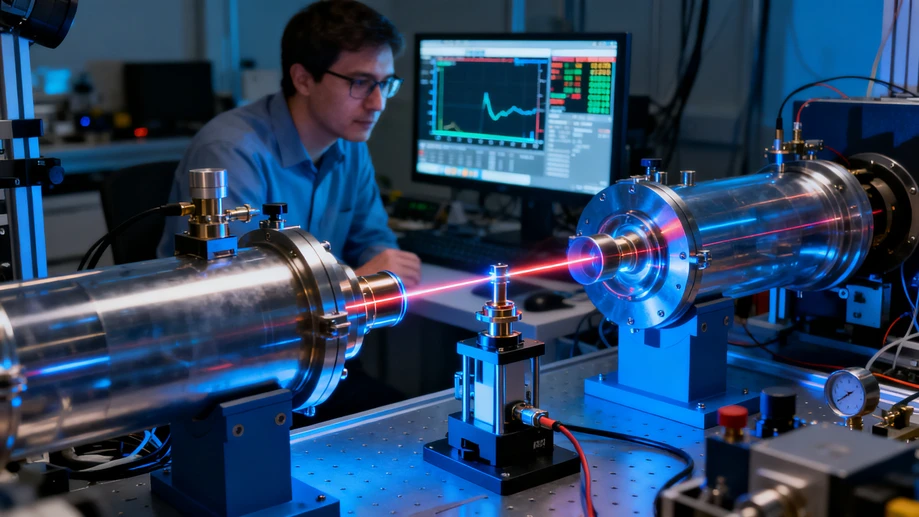
The phenomenon gained notoriety when Einstein, Podolsky, and Rosen highlighted its strange implications in their 1935 EPR paradox paper, calling it "spooky action at a distance." Their thought experiment revealed that measuring one entangled particle would instantly determine the state of its partner, seemingly violating relativity's cosmic speed limit – light's velocity. However, John Bell's 1964 inequality theorem provided a mathematical framework to test entanglement experimentally. Subsequent experiments with photons and electrons confirmed that entangled particles do communicate faster than light could travel between them, establishing entanglement as fundamental quantum behavior.
Physically, entanglement arises from quantum superposition and measurement-induced collapse. Particles are created or interact in ways that link their quantum properties (such as spin or polarization) through conserved quantities. Before measurement, these properties exist in indeterminate superpositions. Measuring one forces the entire system to "choose" a definite state. Crucially, no information transfer occurs during entanglement since outcomes remain random until measurement. The correlations only become apparent when results from both particles are compared later.
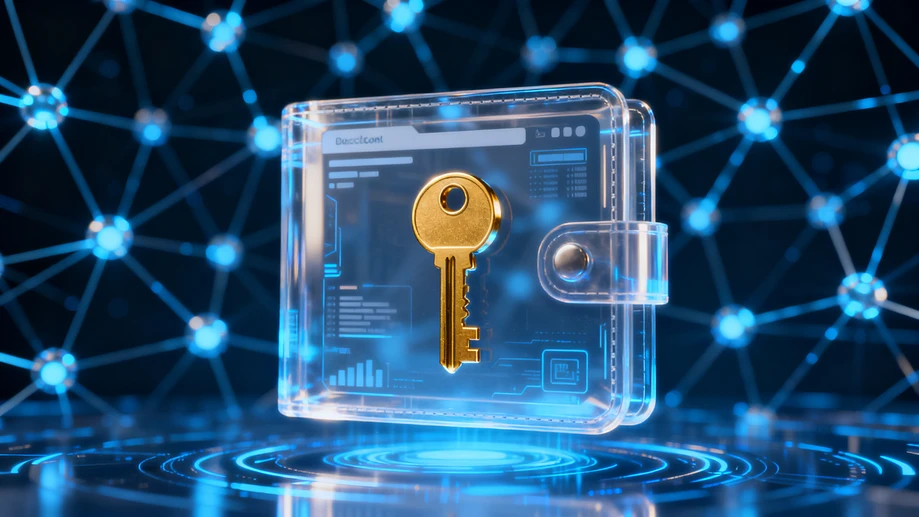
Quantum technologies harness entanglement as a fundamental resource. Quantum cryptography systems like Quantum Key Distribution (QKD) use entangled photon pairs to generate inherently secure encryption keys, as any eavesdropping attempt disrupts entanglement. Quantum computers leverage entangled qubits to perform calculations through quantum parallelism, enabling exponential speedups for problems like molecular simulation. Entanglement swapping forms the basis for quantum repeaters, essential components for building long-range quantum communication networks across global distances.
Recent advancements continue revealing entanglement's remarkable scope. Experiments have sustained entanglement between particles separated by over 1,200 kilometers. The phenomenon extends beyond particle pairs to complex systems – scientists have entangled thousands of atoms in Bose-Einstein condensates and demonstrated quantum coherence in macroscopic objects like diamonds. Researchers are also exploring entanglement's potential role in quantum gravity theories and its connection to spacetime geometry through the ER=EPR conjecture, suggesting wormholes and entanglement might represent different manifestations of the same underlying physics.