The WiFi Whisperers: Unseen Signals That Shape Your Day
How Invisible Waves in Your Living Room Control More Than You Realize
Picture this: You wake up to your smart alarm, stream news on a tablet while brewing coffee, then commute with navigation chirping from your phone. What invisible conductor orchestrates this symphony? Radio waves – the silent workhorses in every modern home.
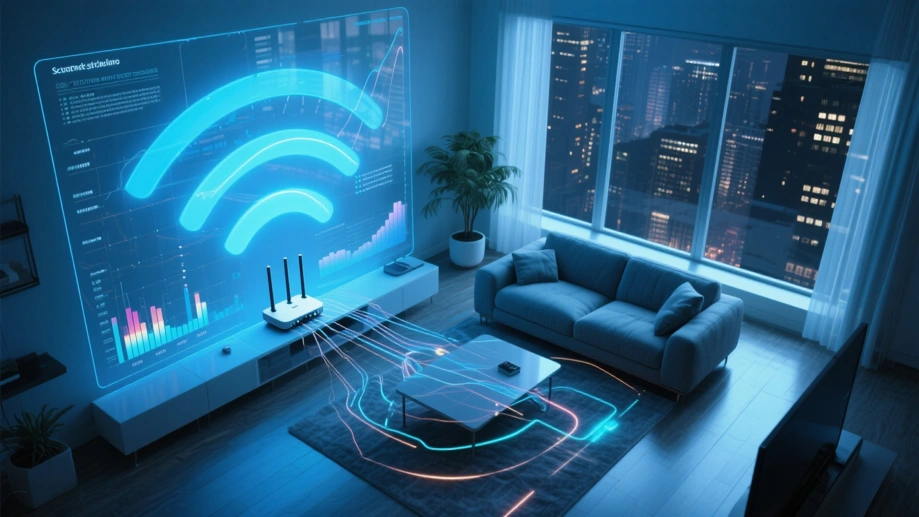
Unlike their visible light cousins, radio waves slip unnoticed through walls and furniture. Their wavelengths range from millimeters to kilometers, each size assigned specific tasks by international agreement. Your router's 2.4GHz frequency pierces obstacles well but shares crowded airspace with microwaves and baby monitors. The 5GHz band offers faster speeds yet surrenders to a solid wall like a sprinter hitting quicksand.
Signal interference causes more drama than a reality show. When your Bluetooth earbuds stutter during a video call, it's likely competing devices jockeying for bandwidth. The invisible tug-of-war escalates when neighbors' networks overlap on limited channels. Modern routers deploy secret weapons like beamforming – focusing signals like a flashlight beam toward your device instead of flooding the entire room.
Physical environments manipulate radio waves in astonishing ways. Water-rich materials like plants or fish tanks absorb signals like sponges, while metallic surfaces create reflective dead zones. Ever notice worse reception near that chrome fridge? It's essentially creating a tiny Faraday cage. Strategic router placement becomes a high-stakes game of hide-and-seek with physics.
Security protocols provide digital armor for these invisible highways. WPA3 encryption scrambles data so thoroughly that even nearby eavesdroppers intercept only cosmic noise. Yet risks persist when devices automatically connect to "free" rogue hotspots broadcasting familiar network names. These digital doppelgängers can siphon data like ghosts walking through walls.
Looking toward the horizon, Wi-Fi 7 promises near-instant transmission speeds that could replace HDMI cables. Meanwhile, emerging terahertz waves might someday enable "see-through-vision" sensors. But even tomorrow's tech must obey fundamental laws: the lower-frequency waves travel farther, while higher frequencies deliver more data – an eternal trade-off written into the universe's operating manual.
The air around us pulses with organized chaos. Microwave ovens, car key fobs, and weather radars all dance on different radio frequencies regulated to prevent cosmic traffic jams. This careful coordination prevents your garage opener from suddenly triggering neighborhood doorbells – a silent pact maintained by wavelengths we'll never see.