Are You Ready to Own a Piece of the Internet?
Forget just browsing; Web3 is handing you the keys to the digital kingdom.
Imagine waking up one morning to find that the quirky digital artwork you collected online for fun has skyrocketed in value. Or picture a world where your favorite online community doesn't just discuss ideas but actually votes on and funds them directly, with everyone having a real stake. This isn't science fiction; it's the tangible promise of Web3, the next evolution of the internet built on principles of ownership, decentralization, and user control. It's shifting the power dynamic from big tech gatekeepers back to the individuals who create and participate online.
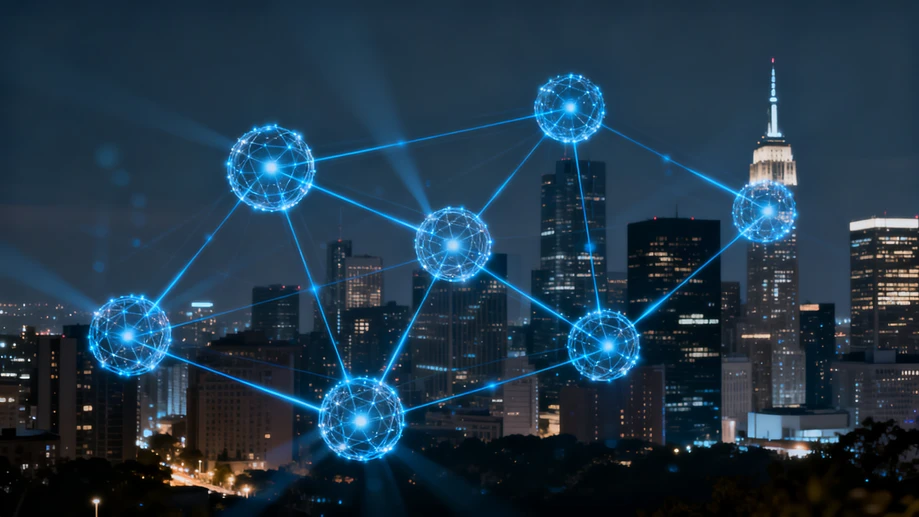
At the heart of Web3 lies blockchain technology, the same innovation powering cryptocurrencies like Bitcoin and Ethereum. Think of it as a revolutionary kind of digital ledger, but instead of being locked away in a bank's vault, copies exist simultaneously on thousands of computers worldwide. This network constantly verifies and records every transaction, making it incredibly secure and nearly impossible to tamper with. This transparency and security are foundational. They allow for something previously unthinkable online: true digital ownership and scarcity. Your digital assets – whether art, music, game items, or even virtual land – aren't just files on a company's server; they are provably yours, recorded immutably on the blockchain.
This concept of verifiable ownership is most vividly demonstrated by Non-Fungible Tokens (NFTs). While often associated with digital art and collectibles, NFTs are essentially unique digital certificates of authenticity and ownership stored on the blockchain. They prove that *you* own a specific digital item, distinguishing it from infinite identical copies. This unlocks new possibilities: artists can sell their work directly to fans and receive royalties automatically on secondary sales; musicians can offer exclusive experiences tied to token ownership; gamers can truly own their in-game assets, potentially using or selling them across different games or platforms. The value shifts from the platform holding your stuff to the stuff itself and its verifiable provenance.
Beyond ownership, Web3 fosters entirely new ways to organize and collaborate online through Decentralized Autonomous Organizations (DAOs). Imagine a club, an investment group, or even a charitable organization run not by a single leader or board, but by rules encoded in smart contracts (self-executing code on the blockchain) and governed by the collective votes of its members, who hold tokens representing their stake. Proposals are made, debated transparently on-chain, and voted upon. If the vote passes, the smart contract automatically executes the action, like releasing funds. This structure enables communities to pool resources, make decisions collectively, and operate with unprecedented transparency and alignment, all without a traditional hierarchical structure.
While the potential is immense, Web3 is still in its adolescence. Challenges abound: user experience can be clunky and intimidating for newcomers; scalability issues mean transactions can sometimes be slow or expensive; regulatory clarity is still evolving globally; and security risks, while inherent to any new technology, require constant vigilance. However, the core vision – an internet where users control their data, identity, and assets – is a powerful counterpoint to the centralized models dominating today. The momentum is building, driven by developers, creators, and communities eager to reclaim their digital sovereignty.
So, is Web3 just a buzzword or a fleeting trend? The evidence suggests it's a fundamental shift. It’s about building an internet layer where value flows directly to creators and participants, where communities govern themselves transparently, and where digital ownership isn't just a promise but a verifiable reality. The tools are being forged, the communities are forming, and the early experiments, despite their hiccups, are proving the concepts work. The question isn't really *if* Web3 will reshape parts of our digital lives, but *how* and *when* you'll choose to step in and claim your piece of the future internet.