Strawberry Code Cracked: Sweet Science in the Patch
Unlocking genetic secrets transforms ordinary berries into climate warriors
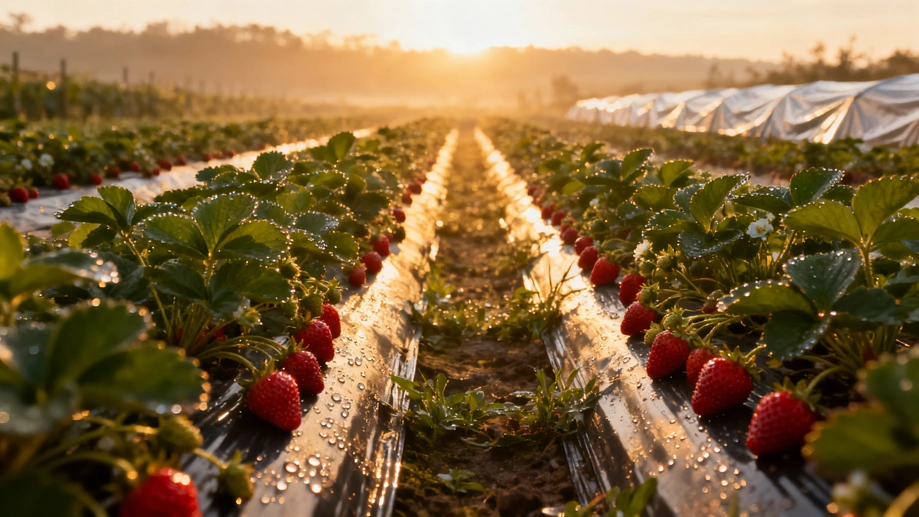
Strawberry fields might seem like simple patches of green, but beneath those heart-shaped leaves lies a genetic treasure hunt. Scientists now read nature's playbook with astonishing precision, locating specific DNA sequences that dictate everything from sweetness to shelf life. This isn't science fiction – it’s happening right now, where molecular markers act like GPS coordinates in the strawberry genome, guiding breeders toward better berries without a lab coat in sight.
The transformation starts at the roots of an age-old problem. Wild strawberries packed intense flavor but were small and fragile, while commercial varieties sacrificed taste for sturdiness. Genetic detective work revealed why: natural trade-offs between size genes and sugar-producing compounds. Modern techniques bypass these compromises by spotting plants with rare, naturally occurring mutations for both plumpness and flavor. Breeders propagate these superstars through traditional cuttings, turning promising mutations into entire fields of superior berries.
Disease resistance forms another frontline battle. Powdery mildew once required constant chemical warfare, turning strawberry patches into spray zones. Now, researchers pinpoint plants carrying natural resistance genes from wild cousins growing in harsh environments. They use these rugged varieties as genetic donors, crossbreeding their toughness into commercial lines. Within a few seasons, new strawberry varieties emerge that shrug off diseases that would have devastated entire crops just years ago.
Climate challenges push the innovation further. As weather patterns shift, strawberries face drought stress and unpredictable frosts. Here, molecular insights prove critical: discovering which genes activate protective compounds during water scarcity, or which trigger frost tolerance mechanisms when temperatures plummet. Breeders select parent plants expressing these traits strongly, accelerating development of berries that thrive in extremes where others would wither. Field tests show these resilient varieties maintaining juicy yields while neighboring plots brown under stress.
The texture revolution remains particularly mouthwatering. Everyone knows the disappointment of a mealy strawberry. Cellular biology explains the culprit: pectin breakdown triggering cell wall collapse. Modern breeding programs now identify parent plants with firmer cell structures using simple DNA tests. Their offspring produce berries that stay satisfyingly crisp long after picking, traveling better from farm stands to kitchens without sacrificing that signature summer burst of flavor.
Beyond survival and convenience lies nutrition’s hidden frontier. Purple-hued varieties signal powerful anthocyanins, antioxidants linked to health benefits. Genetic mapping illuminates the pathways producing these compounds. Breeders favor deep-colored seedlings rich in these nutrients, creating berries that deliver enhanced wellness benefits naturally. Imagine future markets featuring strawberries selected not just for size, but for measurable boosts in beneficial compounds that develop fully in home gardens and commercial fields alike.
As this biological toolbox grows, the humble strawberry patch quietly evolves. Through smart gene selection rather than artificial alteration, science collaborates with nature’s own diversity. Within seasons instead of decades, new generations of berries emerge – tougher against threats, easier to grow, and bursting with honest-to-goodness flavor picked fresh from the vine. The proof, as always, waits patiently in the dirt, ripening under the sun.