Quantum Entanglement: The Intricate Bond That Defies Distance
An exploration into one of quantum mechanics' most perplexing phenomena, where particles remain interconnected regardless of separation.
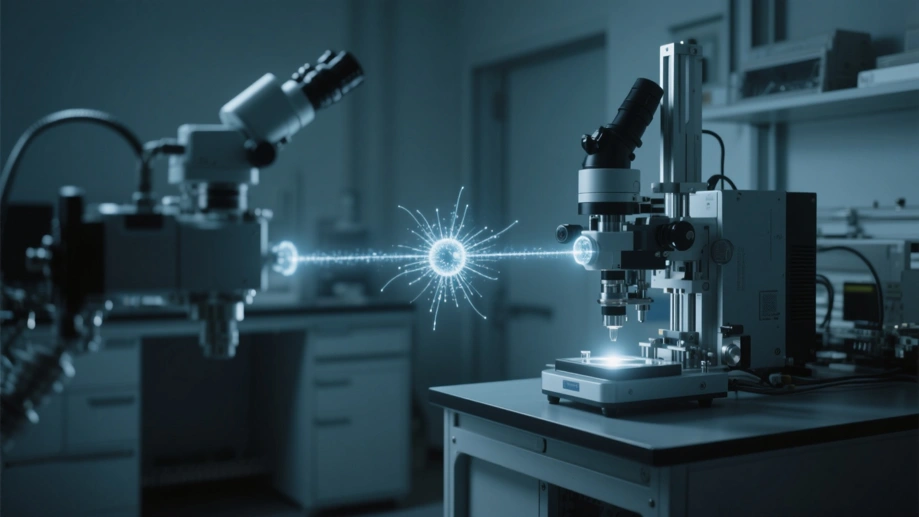
At the subatomic scale, quantum entanglement describes a profound connection between particles where their physical properties become inextricably linked. When particles such as electrons or photons become entangled, measuring a property like spin or polarization of one instantaneously determines the state of its partner, even if separated by cosmic distances. This connection persists despite the absence of any known force or signal passing between them, directly challenging classical notions of locality.
The phenomenon first emerged from theoretical debates in the 1930s, most notably in the Einstein-Podolsky-Rosen (EPR) paradox. Albert Einstein famously dismissed it as "spooky action at a distance," arguing that such instantaneous influence violated relativity. For decades, entanglement remained a philosophical curiosity until physicist John Bell developed a mathematical framework in 1964. His inequalities provided a testable distinction between quantum predictions and classical hidden-variable theories.
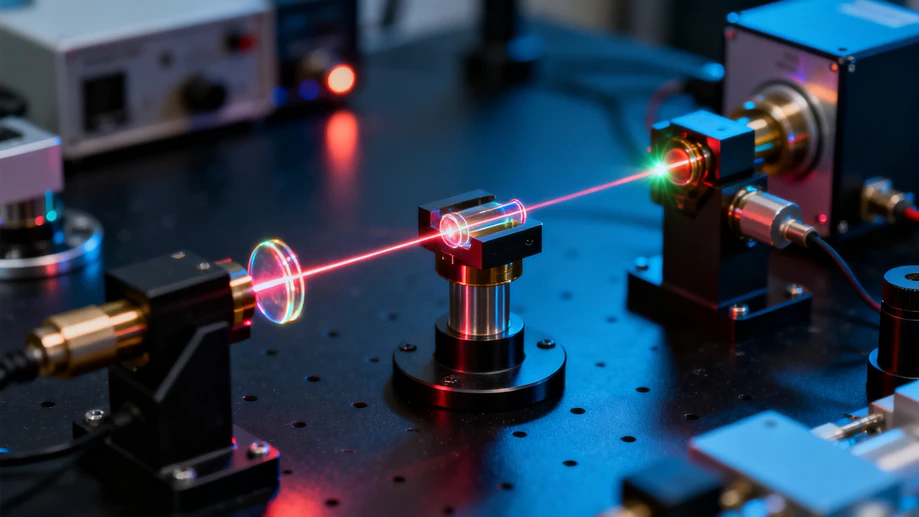
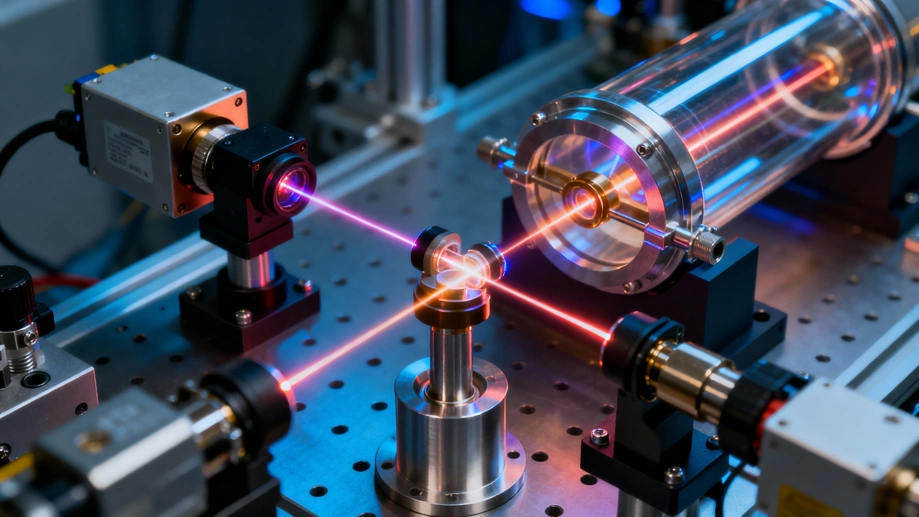
Experimental validation began in earnest during the 1970s and 1980s. Alain Aspect's landmark experiments with polarized photons demonstrated violations of Bell's inequalities, confirming that entangled particles exhibit correlations impossible in classical physics. Subsequent refinements using diamond nitrogen-vacancy centers and trapped ions have closed key loopholes, such as the locality and detection loopholes. These experiments consistently show measurement correlations exceeding 99.9% confidence, establishing entanglement as a fundamental quantum property.
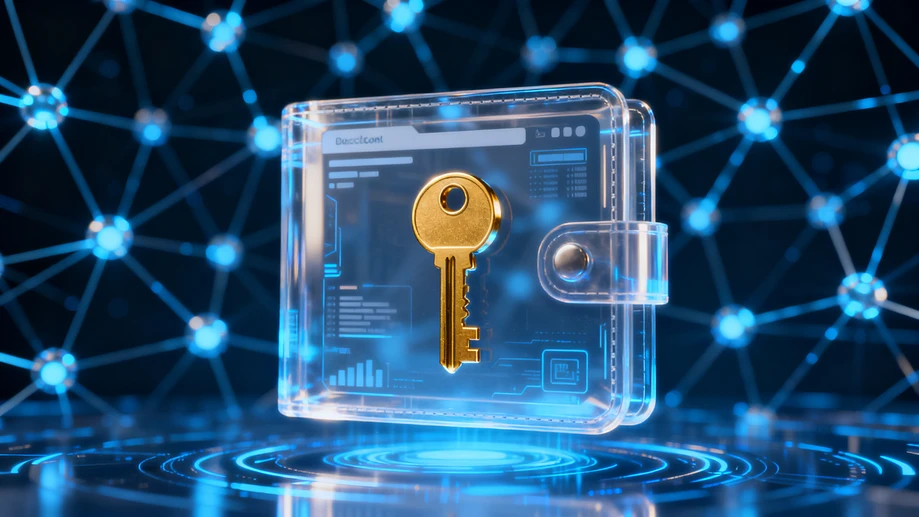
Practical applications leverage this non-local correlation. Quantum cryptography exploits entanglement to create theoretically unhackable communication channels through quantum key distribution. Any eavesdropping attempt disrupts the entangled state, alerting users to security breaches. Quantum computing utilizes entangled qubits to perform parallel computations. In prototype quantum networks, entanglement swapping enables quantum information transfer across nodes without physical particle movement.
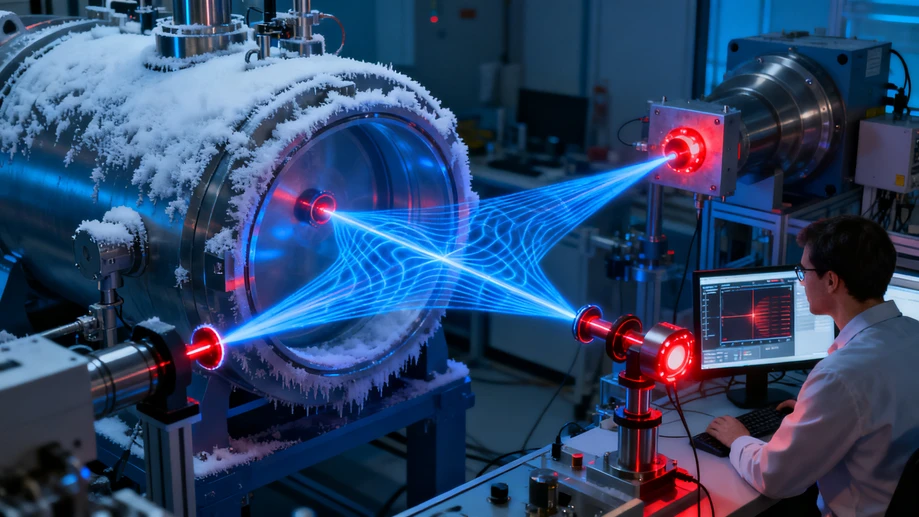
Current research focuses on entanglement's scalability and persistence. Laboratories now maintain entanglement between particles separated by over 1,200 kilometers via satellite-mediated experiments. Challenges include quantum decoherence—where environmental interactions destroy entanglement—addressed through cryogenic systems and error-correcting codes. Investigations into many-body entanglement explore complex quantum materials, while quantum repeaters aim to extend entanglement across global networks. Recent theoretical work probes entanglement's role in spacetime geometry, potentially linking quantum mechanics with general relativity.