The Invisible Superhighway: How WiFi Wiggles Through Walls
Demystifying the Journey of Wireless Signals Around Your Home
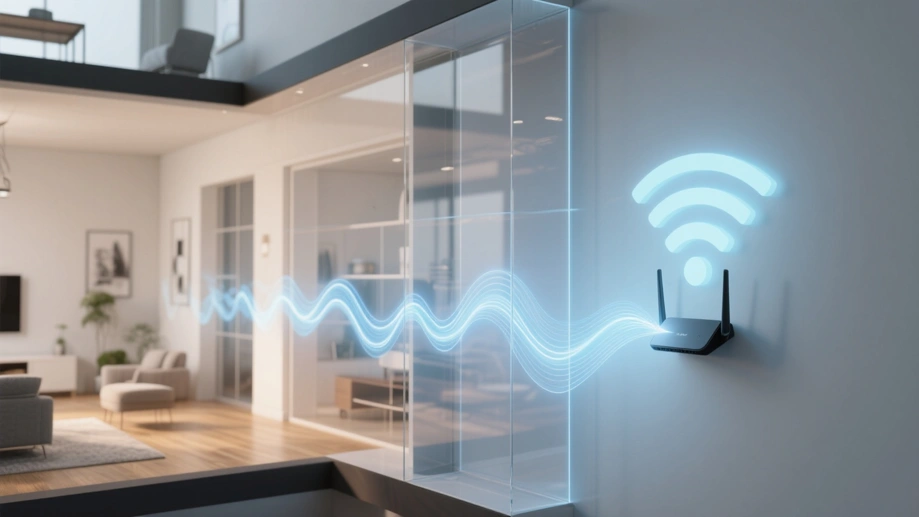
Ever wondered how your cat videos magically stream to your tablet even when you move between rooms? That invisible data highway zipping through your walls relies on electromagnetic waves – the same fundamental physics that makes radios work. Unlike visible light waves we can see, WiFi operates in the radio frequency spectrum, specifically around 2.4 GHz or 5 GHz. These waves have just the right properties to partially penetrate common building materials while carrying digital information encoded as subtle wave variations. The science might sound complex, but it's essentially your router having millions of silent conversations with devices using waves too small for human senses to detect.
Different materials interact with WiFi signals in surprisingly varied ways. Drywall and wood cause relatively minor signal loss, allowing about half the strength to pass through a typical interior wall. Concrete and brick act like thicker obstacles, absorbing or reflecting more waves and potentially cutting signal strength by 75% or more. Water-heavy materials are particularly troublesome; that lush indoor fern or even a fishtank can disrupt signals because water molecules absorb radio frequencies efficiently. Metal objects create complete dead zones since they reflect waves like mirrors reflect light, explaining why hiding your router inside a metal cabinet kills connectivity.
The frequency choice creates fascinating trade-offs. Lower 2.4 GHz signals travel farther through obstacles but carry less data – imagine a wide but slow-moving river. Higher 5 GHz waves transport data faster like a narrow rapid stream, yet they struggle more with physical barriers. This explains why moving closer to your router often unlocks those faster internet speeds. Modern routers cleverly switch frequencies based on your location and activity, ensuring your video call keeps flowing smoothly from the backyard patio through several walls back to the modem. This dynamic adjustment happens thousands of times per second without any human intervention.
Signal strength doesn't just gradually fade like a dimming lightbulb; it drops dramatically when crossing physical barriers then stabilizes again. Engineers quantify this as "decibels of loss" per barrier crossed. Three interior walls might reduce a strong signal to near-useless levels, creating those frustrating dead zones in back bedrooms. This exponential drop-off explains why adding one extra room between you and the router often degrades performance far more than simply doubling your distance in an open space. The wave’s energy literally gets transformed into tiny amounts of heat within the wall materials themselves – a negligible warming effect utterly dwarfed by everyday sunlight.
Environmental interference adds another layer of complexity. Common electronics like microwaves or cordless phones emit waves in the same crowded 2.4 GHz neighborhood, creating overlapping chatter that confuses WiFi signals – like trying to hear across a noisy cafeteria. Thicker walls reduce this crosstalk between apartments, which ironically makes dense apartment buildings better WiFi environments than many single-family homes with thin partitions. Signal boosters work by detecting these faint residual waves surviving their wall journey, amplifying them cleanly, then re-transmitting the enhanced signal further into difficult spaces. They essentially shout what your router whispered.
Future technologies are innovating around these physical constraints. Mesh network systems create multiple signal relay points, turning one router’s solo effort into a team handoff where no single wave travels too far through obstacles. Emerging frequencies like 6 GHz will add more lanes to this invisible highway, while beamforming techniques concentrate signals directionally like flashlight beams targeting specific devices. Though walls remain fundamental barriers, understanding these hidden mechanics helps optimize router placement – typically central and elevated positions avoid the most troublesome obstructions. That persistent two-bar struggle in your bathroom? It’s less about your device and more about radio waves waging an epic battle against plumbing pipes and ceramic tiles.