Rain or Shine: How Scientists Taught Solar Panels to Dance in the Rain
Harnessing raindrop energy could turn gloomy weather into a power source.
We’ve all seen solar panels sitting idle on cloudy days – sleek, silent, and utterly useless when rain clouds roll in. For decades, this weather dependency has been solar energy’s Achilles’ heel. But what if those annoying raindrops pelting your rooftop panels weren’t just a nuisance? What if they could actually be put to work?
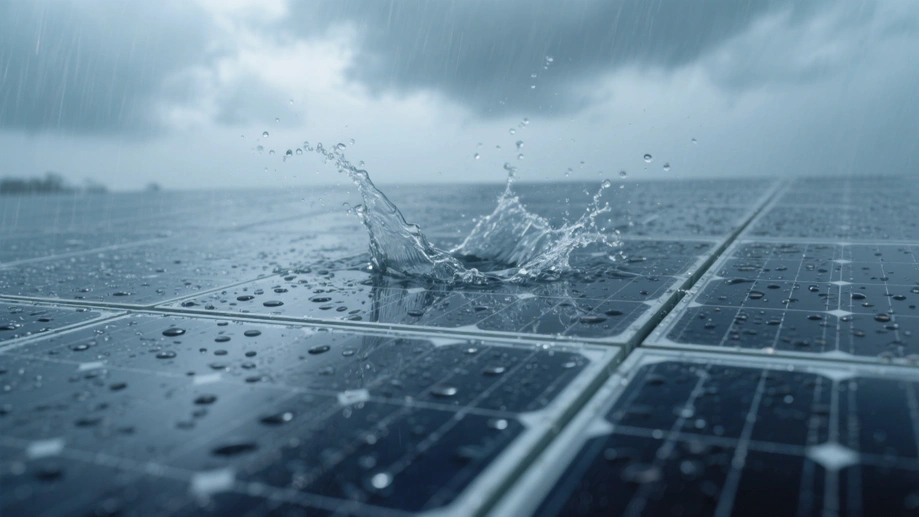
This isn’t sci-fi fantasy. Researchers discovered that falling raindrops carry surprising potential. As each droplet strikes a surface, it creates tiny vibrations and gathers an electrical charge through friction, similar to static electricity from rubbing a balloon. The challenge? Traditional solar panels, designed to absorb sunlight, completely ignore this liquid visitor.
The breakthrough came from materials science. Engineers developed an ultra-thin, transparent layer that can be applied to existing solar panels. This coating acts like a dual-purpose skin: it lets sunshine pass through normally while capturing the mechanical energy from raindrops. How? The magic lies in "triboelectric nanogenerators" – think of them as microscopic sponges that soak up energy from physical impacts.
Here’s where it gets clever. Each raindrop compresses and releases the coating’s specially designed structure, generating small electrical pulses. Thousands of falling droplets during a downpour create constant micro-zaps of electricity. It’s like tapping a drum repeatedly – each tap is small, but the rhythm builds power.
Now, let’s be real. A rainy solar panel won’t suddenly outperform its sun-basking self. Early tests show rain power contributing about 5-10% of what the same panel produces under strong sunlight. But here’s the game-changer: that’s energy harvested during previously "dead" time. For regions like Britain or the US Pacific Northwest with frequent showers, this could significantly boost annual energy yield. No longer would panels hibernate through winter storms.
The implications ripple beyond rooftops. Imagine self-powered rain sensors in remote weather stations, or floating solar farms on reservoirs generating electricity from both sun and rainfall. Coastal areas – often rainy with huge solar potential – could benefit tremendously. Even agriculture might integrate these panels in waterlogged fields that are unsuitable for traditional solar setups.
Of course, hurdles remain. The coating must prove durable against years of weathering and accidental damage. Researchers are also racing to increase efficiency without blocking sunlight. But the progress signals a fundamental shift: we’re learning to design renewable tech that doesn’t just tolerate nature’s variability, but actively exploits it.
Our relationship with renewables is maturing. Early solar technology sought perfect conditions; next-gen solutions find opportunity in imperfection. Rainy-day solar panels remind us that true resilience comes from adapting to our environment, not conquering it. As climate patterns grow more erratic, such hybrid systems that squeeze energy from multiple sources may prove essential.