The Invisible Maestro: How Your Home Learns Your Comfort Zone
Unlocking the hidden algorithms that predict your perfect temperature before you even ask
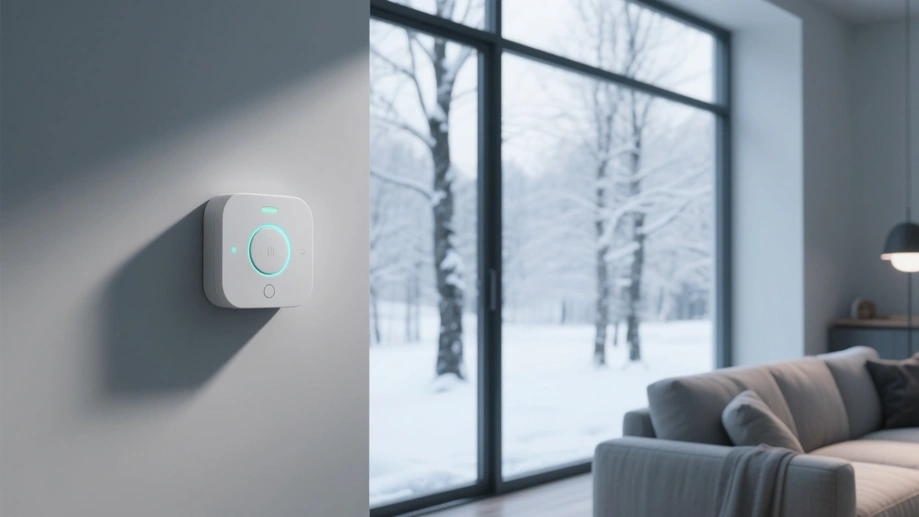
Walk into any modern living room after a long day, and you might take that perfect ambient temperature for granted. But behind that seamless comfort lies a quiet revolution in machine intelligence. Contemporary smart thermostats don't just react to manual adjustments; they actively study your rhythms and anticipate your needs. Using simple motion detectors and door sensors, these unassuming wall-mounted devices build complex behavioral maps.
This predictive capability stems from pattern recognition rather than futuristic magic. After approximately one week of monitoring movement patterns and manual overrides, the system begins detecting correlations. It may notice you consistently raise the temperature at 6:45 AM on weekdays, or that the living room remains unoccupied every Tuesday afternoon. Gradually, it constructs what engineers call a "comfort profile" – essentially a digital reflection of your thermal preferences throughout the daily and weekly cycles.
What truly elevates this beyond programmed schedules is contextual adaptation. Unexpected events don't derail the system. If the family leaves for an unplanned weekend trip, motion sensors detect the abnormal stillness. By the second consecutive inactive morning, the thermostat will autonomously switch to energy-saving mode. Similarly, an early return home on a workday triggers almost immediate reversion to comfort settings. This responsiveness creates a living environment that appears intuitively aligned with your life.
The implications extend well beyond convenience into tangible resource conservation. Traditional programmable thermostats operate on rigid schedules, inevitably heating or cooling empty spaces. Predictive systems eliminate this waste by dynamically matching operation to actual occupancy patterns. Studies demonstrate these algorithms can reduce HVAC runtime by up to 23% compared to schedule-based systems without sacrificing comfort levels during occupied periods.
Perhaps most remarkably, this continuous optimization occurs silently through incremental adjustments. You won't notice the half-degree nightly temperature dip implemented when the system confirms consistent bedtime routines. Nor will you detect the subtle pre-warming that starts earlier on cloudy mornings versus sunny ones. Over time, these micro-adaptations based on historical weather responses significantly compound energy savings.
Of course, the system evolves with its users. Major life changes like shift work alterations or growing families naturally require recalibration. Modern devices handle this gracefully through passive re-learning phases or explicit "recalibration" commands. Each manual override becomes fresh data, sharpening future predictions rather than disrupting existing programming. This fluid relationship between human action and machine learning forms the core of genuinely adaptive automation.
Fundamentally, this technology demonstrates how inconspicuous sensors paired with basic computational analysis can generate sophisticated environmental awareness. Your home doesn't achieve sentience, but through systematic observation and pattern application, it develops functional understanding of your needs. The algorithms transform static structures into responsive environments that anticipate thermal requirements with startling efficiency – proving that smart technology achieves its greatest potential when working quietly in the background of daily life.