The Silent Voyager: How Wi-Fi Waves Sneak Through Your Walls
Unraveling the Mysteries of Invisible Data Travelers in Our Homes
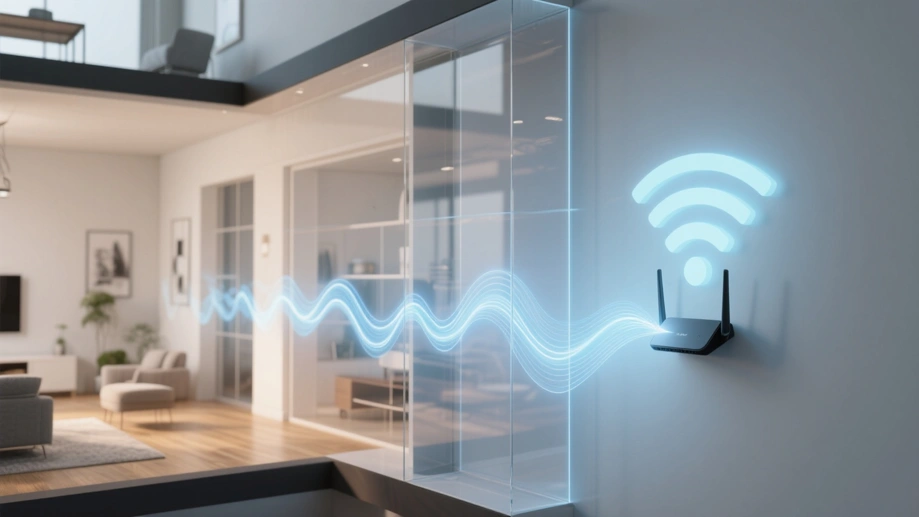
Ever paused mid-scroll to wonder how your cat video streams flawlessly from another room? That invisible magic hinges on electromagnetic waves performing an astonishing architectural ballet. At frequencies between 2.4 and 5 gigahertz, these signals behave like nimble messengers, exploiting physics loopholes in everyday materials. Unlike visible light blocked by walls, Wi-Fi wavelengths measure around 12 centimeters—small enough to slip through microscopic gaps in drywall yet large enough to diffract around obstacles. Their penetration power relies on wavelength-to-material-thickness ratios, allowing partial transmission where sunlight fails completely.
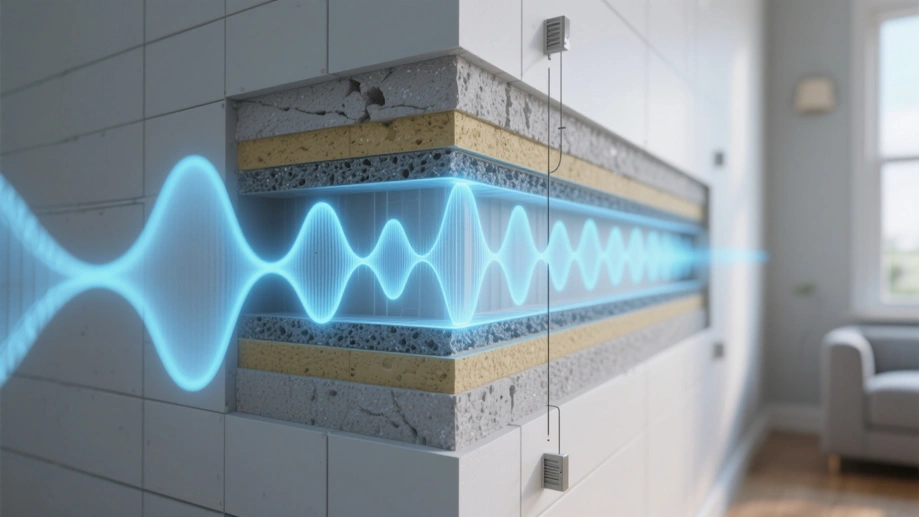
Material composition plays a crucial role in this silent invasion. Drywall proves surprisingly permeable since its gypsum core contains air pockets acting as wave tunnels. Concrete, however, absorbs signals like a sponge, thanks to its dense mineral content and internal steel reinforcements. Curiously, water molecules actively disrupt transmission—explaining why rainy weather occasionally throttles speeds and aquarium walls become signal black holes. Glass panes create polarization effects that scatter signals, while mirrors form unintended barriers by reflecting waves away from devices.
Signal degradation reveals fascinating physics at work. When waves hit barriers, three things happen simultaneously: partial penetration, surface reflection, and edge diffraction. Lower-frequency 2.4GHz bands sacrifice speed for greater wall penetration, diffracting effectively around corners. Higher 5GHz signals propagate faster but lose energy rapidly when encountering obstacles, much like how bass notes travel farther than treble tones. Modern mesh network systems exploit this behavior, positioning multiple transmitters to create overlapping wave interference patterns that fill dead zones constructively.
Environmental interference adds another layer of complexity. Microwave ovens operate near Wi-Fi frequencies, causing temporary "brownouts" when heating food. Bluetooth devices create micro-interference like sonic pebbles tossed into the signal stream. Even weather patterns affect propagation—high humidity subtly dampens transmissions, while temperature inversions can unexpectedly extend outdoor network ranges. Physical solutions like strategic router placement leverage this knowledge, suggesting elevated central locations away from metal appliances and water sources.
Future advancements will amplify these hidden journeys. Emerging technologies harness signal reflections as mapping tools, detecting room occupancy through wave distortion patterns—no cameras required. Researchers are developing metamaterials that bend Wi-Fi waves around obstacles like optical invisibility cloaks. Meanwhile, Wi-Fi 7 prototypes promise smarter multi-path coordination, treating walls as dance partners rather than barriers. Understanding these invisible travelers transforms homes from connection battlefields into harmonized data ecosystems.